
Feather grass
Stipa pennata
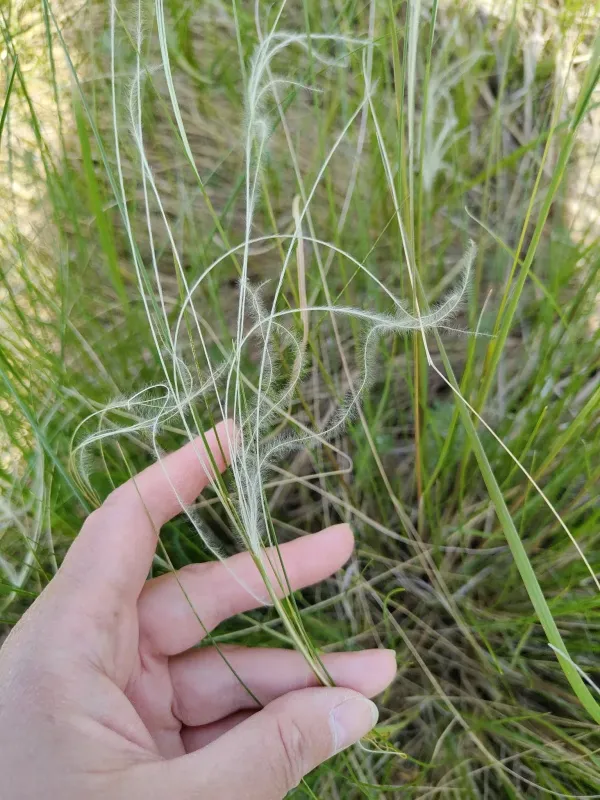
Description
How to tell it apart
Feather grass, scientifically known as Stipa pennata, is a perennial bunchgrass belonging to the Poaceae family. It is characterized by its tufted growth habit and narrow, often rolled leaf blades.
The most distinctive feature is its long, feathery awn, which is covered in fine hairs. This structure aids in seed dispersal by wind and allows the seed to drill itself into the soil surface efficiently.
The root system is fibrous and deep, allowing the plant to survive in harsh, arid conditions. It typically begins its growth cycle early in the spring, gaining an advantage over slower-developing crops.
Reproduction is primarily achieved through wind-dispersed seeds. The plant develops a dense clump of biomass that can persist for many years if not disturbed by agricultural operations.
While often associated with natural grasslands, in an agricultural context, it is recognized by its early-season emergence and the aggressive development of its perennial root system.
Where it grows
Stipa pennata is typically found in steppe, dry meadows, and rocky areas. In agricultural settings, it is a significant weed on pastures, fallow lands, and field margins.
It prefers well-drained, light soils with good exposure to sunlight. It struggles in waterlogged conditions and is usually suppressed by consistent, intensive soil cultivation.
The species is highly competitive in non-tilled areas. It colonizes new territories via wind dispersal, making it a persistent problem for farmers who leave lands uncultivated for long periods.
In modern farming, it is considered a weed when it invades cropland or depletes pasture land, where it outcompetes more desirable forage grasses.
The plant is highly adaptable to semi-arid climates, making it a difficult weed to manage in regions where water competition is a primary concern for crop yields.
Harm it causes
The primary damage caused by feather grass is its intense competition for soil moisture. Its deep roots deplete the soil profile, which is particularly detrimental to crops in drought-prone areas.
The seeds of feather grass have sharp, pointed bases and feathery awns that can injure livestock. They may penetrate the skin or mouth of animals, causing infections and reducing overall health.
Contamination of harvested grain with feather grass seeds is a difficult issue for processing. The awns make the seeds difficult to separate using standard cleaning machines.
Feather grass can exert allelopathic effects on nearby plants by releasing chemical compounds into the soil. This inhibition reduces the germination rates and growth of adjacent crop species.
Furthermore, it serves as a host for various pests and diseases that can move into adjacent wheat or cereal fields, leading to reduced yield and increased need for pesticide applications.
How to control
Deep plowing with moldboard inversion is the most effective mechanical control method. This practice destroys the root system and prevents the regrowth of perennial clumps.
Regular cultivation and discing during the growing season help to weaken the plant. It is essential to perform these operations before the seeds mature to limit the spread.
In pastures, controlled grazing management is key. Avoiding overgrazing helps maintain a healthy cover of desirable grasses, which can naturally suppress the establishment of feather grass.
Chemical control usually involves the use of systemic non-selective herbicides, such as glyphosate, on fallow fields or field borders to kill the plants to the root.
- Moldboard plowing for root destruction.
- Timely cultivation to prevent seed maturation.
- Use of competitive cover crops.
- Application of systemic herbicides on fallow land.
- Rigorous cleaning of grain after harvest to prevent seed bank spread.
Taxonomy
- Latin name
- Stipa pennata
- Family
- Злаковые
- EPPO code
- STDPE