
Fox-tail brome
Bromus alopecuros
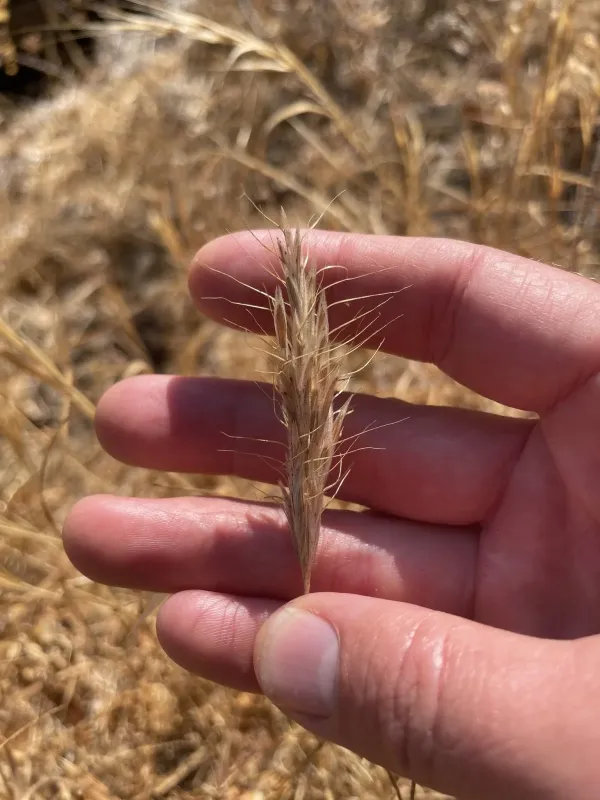
Description
How to tell it apart
Fox-tail brome (Bromus alopecuros) is an annual grass species belonging to the Poaceae family. It is a problematic weed that is often confused with other brome grass species, though it is distinguished by its specific inflorescence.
The plant typically grows up to 60 centimeters in height. Its most notable feature is a dense, spiky, tail-like panicle that resembles the tail of a fox, which gave rise to its common and scientific names.
The stems are erect and often have rough textures. The leaves are narrow, linear, and covered with fine hairs, providing a slightly grayish appearance to the plant foliage during the early vegetative stage.
It possesses a fibrous root system that allows it to survive in dry environments. The plant completes its life cycle quite rapidly, often synchronizing with the growing season of winter cereals.
Reproduction occurs entirely through seeds, which are easily dispersed by wind, agricultural machinery, or contaminated grain supplies. The seeds remain viable in the soil for multiple seasons.
Where it grows
Fox-tail brome is primarily found in regions with Mediterranean or temperate climates. It thrives in open, sunny locations, such as abandoned pastures, field edges, and dry, disturbed soils.
In agricultural settings, it is a significant competitor in winter wheat and barley fields. It easily establishes itself in areas where the soil has been disrupted or where the crop stand is thin.
The weed is highly adaptable and can grow in various soil types, including those that are nutrient-poor or saline, where it outcompetes less hardy crop varieties for resources.
It is frequently observed in perennial grass stands. If not controlled through timely mowing or grazing, the weed can quickly dominate, reducing the quality of fodder and hay.
It is also a common weed in fallow fields, where it can build up a significant soil seed bank if left unchecked for more than one growing season.
Harm it causes
The harm caused by fox-tail brome is primarily due to its aggressive competition for water, nutrients, and sunlight, particularly during the early stages of crop development.
Infestations in cereal crops lead to reduced tillering and lower grain weight, significantly impacting the overall yield per hectare. Farmers often report severe losses when control measures are omitted.
The presence of brome seeds in the final harvest creates problems for storage and processing, necessitating expensive cleaning procedures to ensure the grain meets quality standards.
- Depletion of essential soil moisture.
- Increased competition with crop seedlings for nutrients.
- Potential host for cereal rusts and other pathogenic fungi.
Additionally, the weed can negatively affect the field's micro-environment, as its root system can influence the development of the beneficial soil microbiome necessary for crop health.
How to control
Successful management of fox-tail brome requires an integrated approach. Crop rotation is essential; alternating cereals with broad-leaved or row crops helps break the weed's reproductive cycle.
Mechanical control includes autumn cultivation and deep plowing to bury weed seeds, preventing them from emerging in the spring. Timely harrowing can also effectively destroy young seedlings.
Chemical control involves the use of selective herbicides during the early growth stages of the weed. It is vital to apply these treatments when the weed is at the 2- to 4-leaf stage for maximum efficacy.
Using high-quality, certified, and weed-free seeds is the most effective preventative measure. This reduces the risk of introducing the weed into clean fields from external sources.
Regular monitoring of field margins and buffer zones is recommended. Removing individual plants before they reach the flowering stage prevents further spread of seeds into the main production areas.
Taxonomy
- Latin name
- Bromus alopecuros
- Family
- Злаковые
- EPPO code
- BROAL