
Proserpinaca pectinata
Proserpinaca pectinata
Description
How to tell it apart
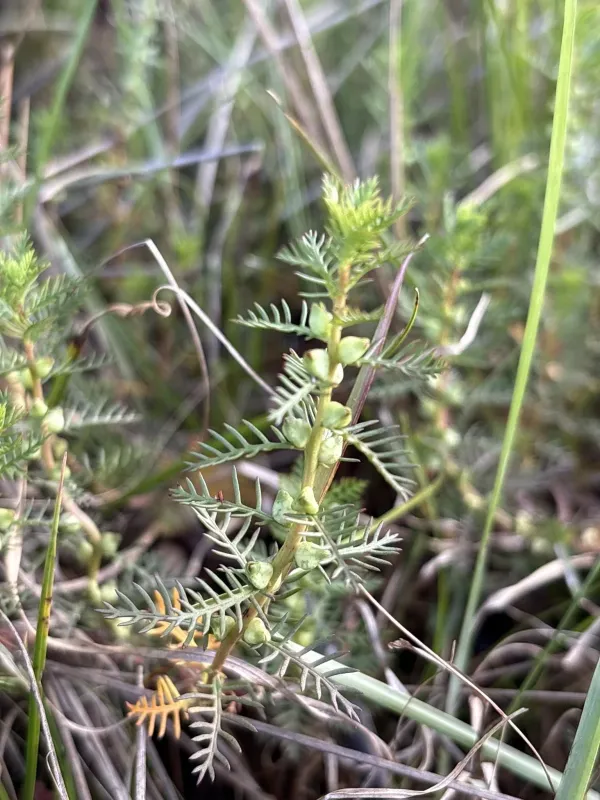
Proserpinaca pectinata, commonly known as comb-leaf mermaidweed, belongs to the Haloragaceae family and is an aquatic or semi-aquatic perennial herb.
Its most distinctive feature is the deeply divided, pectinate (comb-like) leaves, which provide an elegant, feathery appearance when submerged in water.
The stems are typically 30 to 60 cm long, growing horizontally or upright depending on the depth of the water and light conditions of the habitat.
Flowers are inconspicuous and located in the leaf axils, making vegetative spread through stem fragmentation the primary method of colonization.
The species exhibits strong phenotypic plasticity, with submerged leaves showing much more complex dissection compared to its terrestrial forms.
Where it grows
This weed thrives in shallow waters, pond margins, marshes, and ditches characterized by stagnant or very slow-moving water bodies.
In agricultural settings, it is a significant nuisance in irrigation systems and rice paddies where consistent water levels facilitate rapid growth.
It prefers acidic, sandy, or organic-rich soils that remain consistently moist, frequently occupying coastal areas across North America.
Proserpinaca pectinata is highly adaptable and can tolerate periods of drought by transitioning to a terrestrial growth form if the water recedes.
Rapid colonial expansion allows it to dominate shallow-water environments, displacing native aquatic vegetation and altering local hydrology.
Harm it causes
The primary economic impact involves clogging irrigation canals, which reduces water flow efficiency and accelerates siltation of agricultural waterways.
In rice fields, the weed competes aggressively with the crop for mineral nutrients, space, and sunlight, leading to measurable losses in grain yield.
Dense populations of this plant create micro-habitats that foster the spread of aquatic pests and diseases that may cross-contaminate nearby crops.
The accumulation of organic biomass from decaying plants contributes to water eutrophication and diminishes the quality of water used for irrigation.
Manual management is complicated by the plant's high regeneration capacity, as even small stem segments can easily take root in the substrate.
How to control
Agrotechnical management primarily involves regular dredging and cleaning of irrigation channels to prevent the establishment of deep-rooted colonies.
Water level management is a key tool; draining rice paddies during critical periods can suppress weed development and reduce its competitive advantage.
Chemical control requires careful selection of herbicides approved for use in or near aquatic environments to avoid negative impacts on the surrounding ecosystem.
Systemic herbicides can be applied on drained fields, provided that stringent environmental guidelines and safety buffers are maintained.
- Regular mechanical dredging of drainage ditches.
- Draining fields to inhibit aquatic growth stages.
- Use of aquatic-approved systemic herbicides.
- Manual removal of plants before seed maturation.
Taxonomy
- Latin name
- Proserpinaca pectinata
- Family
- Сланоягодниковые
- EPPO code
- PPQPE