
Rough raspwort
Haloragis aspera
Description
How to tell it apart
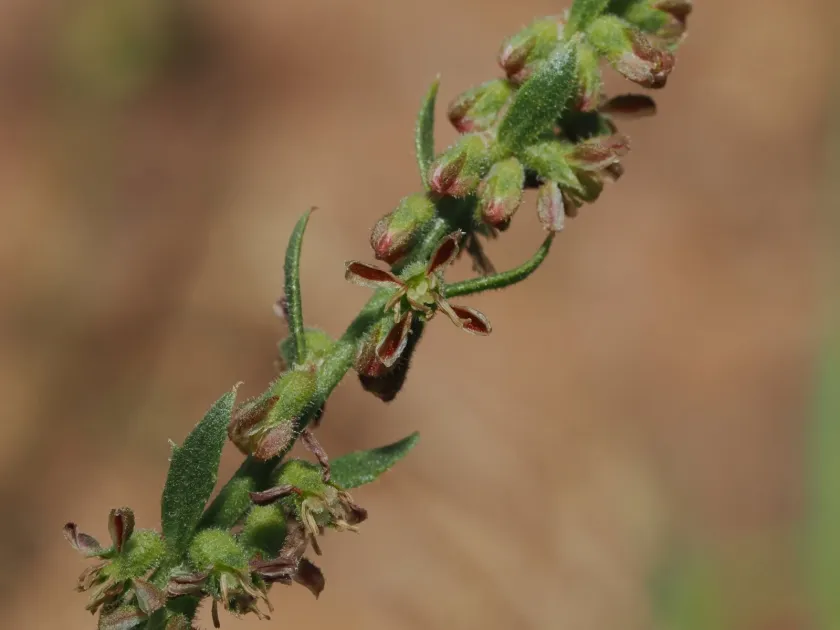
Rough raspwort (Haloragis aspera) is a perennial herb belonging to the Haloragaceae family. It is characterized by its upright or ascending stems, which feature a distinctively rough texture caused by tiny, stiff hair-like projections.
The leaves are opposite and exhibit a lanceolate to ovate shape with serrated margins. This serration is a key diagnostic feature, making the foliage appear jagged or saw-like, which aids in distinguishing it from similar weed species in the field.
The plant produces small, inconspicuous flowers arranged in spike-like or paniculate inflorescences. These flowers often possess a subtle yellowish, green, or reddish hue, allowing the weed to blend into the surrounding vegetation until it reaches full maturity.
Rough raspwort possesses a robust and extensive root system, providing it with excellent survival mechanisms against drought and mechanical disturbance. This feature makes it highly resilient and capable of regenerating quickly if not completely removed from the soil.
The seeds are housed in dry drupes, often with prominent ribs or winged edges, which are adapted for dispersal by wind, water, and human activity through contaminated farm equipment or agricultural produce.
Where it grows
Native to Australia, Haloragis aspera thrives in a wide range of environments, including open woodlands, grasslands, and disturbed sites. Outside its native range, it can become a problematic weed in various agricultural systems.
It prefers well-drained soils but shows high adaptability to heavier clay soils. The plant frequently colonizes agricultural field edges, irrigation channels, and abandoned lands, acting as a source for recurring infestations in cultivated areas.
The weed displays significant ecological plasticity, allowing it to invade landscapes where natural vegetation has been altered. It is commonly found in grain fields, vegetable plots, and pastures where competition from native species is reduced.
Rough raspwort readily occupies areas with sparse canopy cover, where it can quickly establish dense patches. Its ability to colonize such spaces makes it a persistent issue for farmers who rely on intensive land management and cultivation.
Spread is often facilitated by the movement of soil and contaminated seed stock. Vigilance regarding biosecurity and seed cleanliness is essential to prevent the entry of this species into non-infested farm zones.
Harm it causes
The primary damage caused by rough raspwort is severe competition with crops for limited resources such as sunlight, soil moisture, and essential mineral nutrients. This competition is most damaging during the early stages of crop development.
The presence of this weed leads to significant yield losses, as it stunts the growth of target crops and reduces the overall efficacy of fertilizers. By occupying space and utilizing nutrients, it effectively starves the primary crop of its needs.
In pastures, it reduces the nutritional value of the forage. Livestock often avoid eating rough raspwort due to its texture or potential anti-nutritional factors, allowing it to become a dominant species that chokes out valuable pasture grasses.
The difficulty of mechanical removal is exacerbated by the plant’s strong regeneration capacity from fragments left in the soil. This forces growers to invest extra time and resources into repeated eradication efforts, increasing production costs.
Rough raspwort may also serve as a host for various agricultural pests and plant pathogens. Its presence increases the risk of viral and fungal infections spreading to neighboring crops, necessitating broader and more expensive phytosanitary protection.
How to control
Effective control strategies require a combination of mechanical and chemical methods. Deep plowing is highly recommended to disrupt and weaken the root system, making it more susceptible to further treatments and preventing vegetative regrowth.
Crop rotation with competitive, fast-growing varieties can provide significant suppression. By creating a dense leaf canopy, these crops effectively shade the soil, limiting the light available for rough raspwort germination and early development.
Chemical control involving systemic herbicides is highly effective. These should be applied during the plant's peak growth phase to ensure the active ingredients are transported effectively into the root system, leading to complete plant death.
Tank mixing different herbicide modes of action can enhance effectiveness and delay the development of resistance. Choosing the right products depends on the specific crop and local regulatory guidelines regarding agricultural chemical usage.
Follow-up monitoring is crucial after herbicide applications to address any surviving individuals or secondary germination. Clearing drainage ditches and field borders is also necessary to eliminate the long-term seed bank and prevent re-infestation.
Taxonomy
- Latin name
- Haloragis aspera
- Family
- Сланоягодниковые
- EPPO code
- HAGAS