
Marsh mermaidweed
Proserpinaca palustris
Description
How to tell it apart
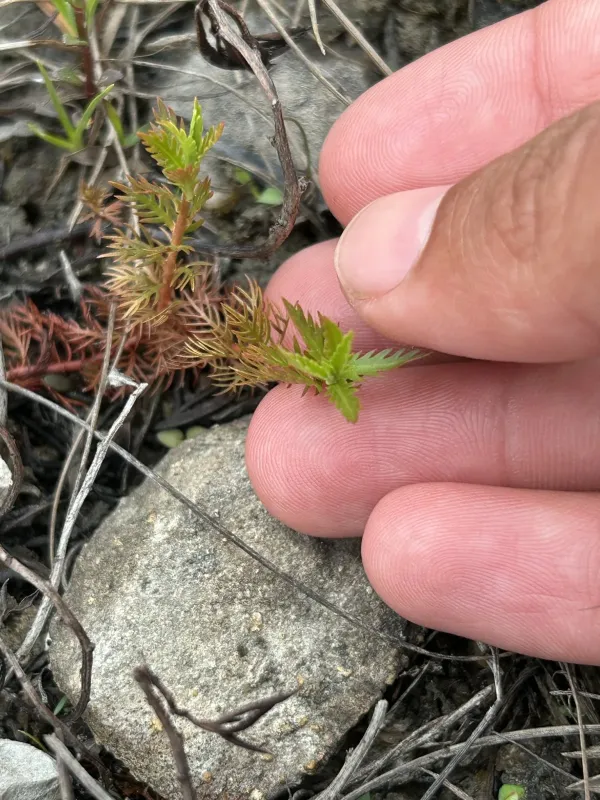
Marsh mermaidweed (Proserpinaca palustris) is a member of the Haloragaceae family. This perennial herbaceous plant is known for its remarkable morphological plasticity.
In terrestrial or semi-aquatic forms, the plant features serrated, lance-shaped leaves. Conversely, when fully submerged, its leaves become deeply pinnately dissected, resembling aquatic ferns.
The flowers are small, greenish, and solitary or grouped in leaf axils. Due to their inconspicuous nature, they often go unnoticed until the plant has fully established.
It possesses a creeping root system that facilitates aggressive colonization of wet substrates and creates a dense mat of vegetation that is difficult to eradicate.
As a hydrophytic species, it is perfectly adapted to environments where water levels fluctuate or remain consistently high throughout the growing season.
Where it grows
The primary habitat for this species includes marshes, swamps, lake margins, and artificial drainage canals where moisture is abundant and persistent.
In agricultural settings, it is a significant weed in rice paddies and flooded fields, as these environments provide ideal conditions for its proliferation.
The species is widespread in North and South America and has become a problematic invasive plant in various irrigation networks globally.
It is capable of thriving in diverse conditions, ranging from shallow seasonal pools to deeper, permanent water channels, which contributes to its ecological success.
Its ability to propagate via both seeds and vegetative fragments allows it to move rapidly along waterway networks, infesting new areas downstream.
Harm it causes
The primary economic harm stems from its competition with crops for nutrients, space, and light, leading to significant yield losses in paddy fields.
In irrigation systems, it blocks water flow, causing increased siltation and reducing the overall efficiency of agricultural water management infrastructure.
The dense biomass makes mechanical cultivation and harvest difficult, as the plant quickly clogs machinery parts during routine field operations.
It acts as a host for various pathogens and pests, which can facilitate outbreaks of diseases that affect nearby cultivated crops.
Due to its resilience and rapid recovery rate, managing this weed requires repeated interventions, which substantially increases operational costs.
How to control
Agrotechnical management focuses on regular clearing of irrigation channels and maintaining precise water levels to prevent stagnant, weed-prone conditions.
Effective soil leveling before planting is a critical preventive measure, as it eliminates low-lying areas where the weed establishes its initial growth.
Chemical control involves the use of systemic herbicides, though their application must be strictly regulated to avoid negative impacts on aquatic ecosystems.
Integration of chemical treatments with periodic draining and cultivation cycles helps deplete the root system's reserves and minimize weed pressure.
- Periodic mechanical dredging of canals.
- Systemic herbicide application in accordance with label guidelines.
- Water management strategies to induce stress on submerged populations.
Taxonomy
- Latin name
- Proserpinaca palustris
- Family
- Сланоягодниковые
- EPPO code
- PPQPA