
Thimbleweed
Anemone virginiana
Description
How to tell it apart
Thimbleweed (Anemone virginiana) is a perennial herbaceous plant belonging to the Ranunculaceae family. It is known for its tall stems and distinct flowering structures.
The plant typically grows to a height of 30 to 80 centimeters. Its basal leaves are deeply palmately lobed with jagged margins, making it distinguishable from other field weeds.
Flowers are characterized by greenish-white sepals and a prominent central cone, which resembles a thimble as the seeds develop later in the season.
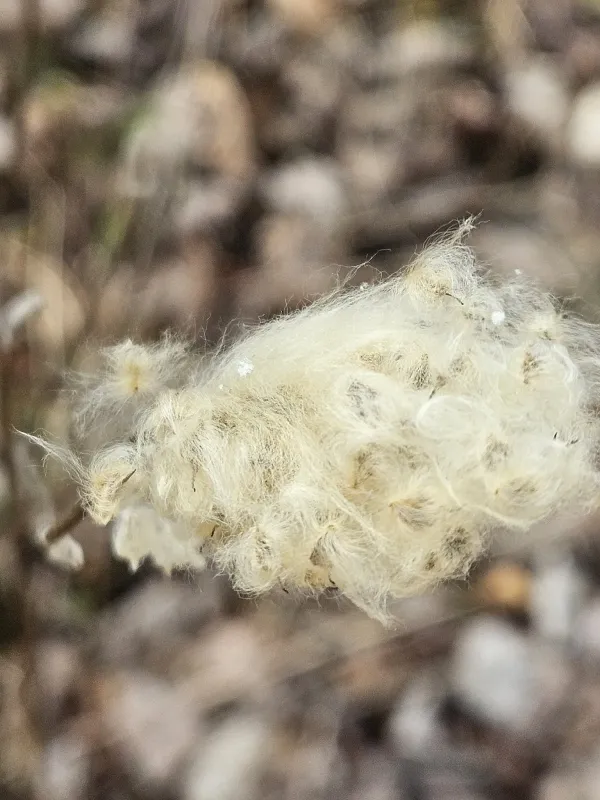
The fruit consists of a dense, cylindrical head packed with small achenes covered in fine hairs, facilitating wind dispersal across cultivated agricultural landscapes.
As a perennial, it maintains a robust root system, allowing it to survive harsh winter conditions and re-sprout vigorously in the following spring season.
Where it grows
Thimbleweed is native to North America and thrives in diverse environments, including open woodlands, moist meadows, and along the margins of agricultural fields.
It prefers well-drained but moist soil conditions. In agricultural settings, it frequently invades fallow land, pastures, and the edges of cultivated crop fields.
The plant demonstrates a high capacity for adaptation, allowing it to encroach into grain fields and forage plots where soil moisture is relatively high.
Abandoned farm lanes and ditches often serve as primary corridors for the spread of this weed into productive farmland, where it competes with crops.
Its ability to establish in disturbed soils makes it a common invader in areas where conservation tillage or minimal soil disturbance practices are employed.
Harm it causes
Thimbleweed is a significant competitor for resources. It draws substantial amounts of water and soil nutrients, directly reducing the yield potential of crops.
The plant contains protoanemonin, which is toxic to livestock. If consumed in fresh forage or hay, it can cause severe gastrointestinal and neurological symptoms in animals.
In pastures, its presence decreases the quality of feed. Because livestock often avoid it, it spreads unchecked, eventually crowding out beneficial forage species.
It also functions as an alternative host for several crop pests and plant diseases, creating a reservoir that can lead to outbreaks in nearby sensitive crops.
Mechanical harvesting is hampered by the presence of dense clumps of Thimbleweed, which may clog machinery and increase the amount of foreign matter in harvested grain.
How to control
Mechanical control through deep tillage is effective for disrupting the root system. Repeated cultivation before flowering is necessary to prevent seed set and spread.
Herbicidal control using systemic products, such as glyphosate-based formulations, is most effective when applied during the active growth phase before full bloom.
Preventative measures include maintaining clean field borders and managing drainage areas where the weed is most likely to establish and spread seeds.
Crop rotation with competitive, fast-growing species can help shade out Thimbleweed seedlings and suppress the establishment of new colonies in the field.
Regular scouting and spot treatment of detected patches are essential to manage Thimbleweed populations before they become deep-rooted, large-scale infestations.
Taxonomy
- Latin name
- Anemone virginiana
- Family
- Лютиковые
- EPPO code
- ANMVG