
Choosing a Wheeled Excavator for Your Project
Choosing the right wheeled excavator is a key factor for successfully completing construction projects. In this article, we will examine how to properly select a wheeled excavator, taking into account the specifics of your project.
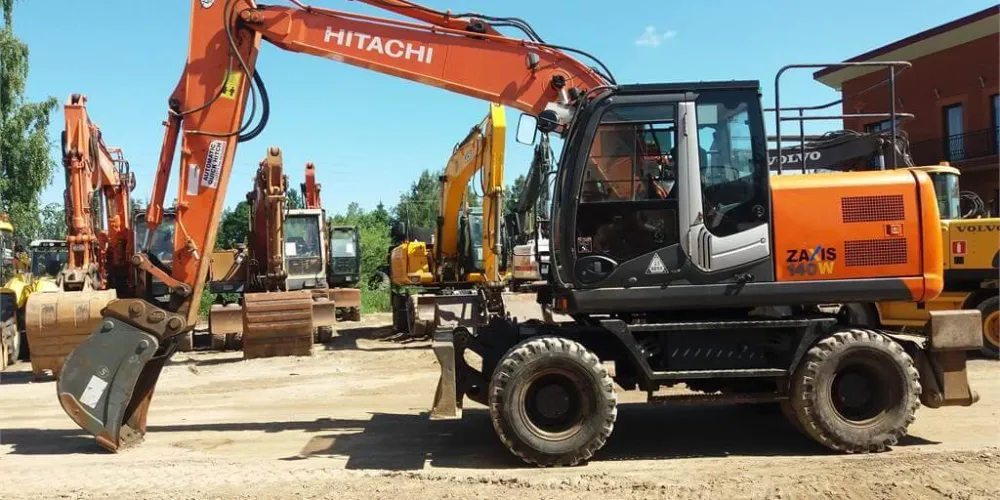
Choosing the right wheeled excavator is a key factor for successfully completing construction projects. Wheeled excavators offer high mobility and versatility, making them ideal for work in urban conditions and on large construction sites. Services of a full-rotation wheeled excavator can significantly increase efficiency and reduce costs for completing tasks. In this article, we will examine how to properly select a wheeled excavator, considering the specifics of your project, and what to pay attention to when choosing equipment.
Defining Project Requirements
When choosing a wheeled excavator for your project, it is important to carefully define the requirements so that the equipment matches the specifics of the tasks and operating conditions.
First, you need to consider the volume and type of earthworks. For large projects involving excavation or digging foundations, you will need an excavator with high load capacity and power. For example, in building construction, it is crucial to accurately dig foundation trenches.
Second, for roadwork such as road construction or repair, it is important to choose an excavator capable of efficiently moving around the construction site and performing necessary tasks like preparing the base and laying pavement. Excavators must have high maneuverability and the ability to work in confined spaces.
The third aspect is demolition. If your project includes dismantling old buildings or structures, the excavator must be equipped with specialized equipment for these tasks. The equipment must be powerful enough to handle heavy loads and capable of performing precise maneuvers.
When performing construction work in quarries, it is important to consider the need to move large volumes of soil and ore. In such conditions, equipment with high reliability and durability is required, capable of operating in difficult and harsh conditions.
Thus, accurately defining project requirements will allow you to choose the right excavator, ensuring efficiency and reliability in task completion.
Key Features of Wheeled Excavators
When selecting an excavator for a construction project, it is important to consider the main features of this special equipment, which directly affect its efficiency and versatility.
One of the key parameters is load capacity. It determines the maximum weight the excavator can lift and move using its boom and bucket. High load capacity allows handling large volumes of material and heavy loads, which is especially important for large-scale construction tasks.
Digging depth is another important characteristic, determining how deep the excavator can dig. This is particularly relevant for projects involving foundation trenching or laying underground utilities.
Maneuverability and ability to travel on public roads are important aspects for wheeled excavators. Such specialized equipment easily moves between construction sites and can be used in urban construction sites where high mobility is required. Wheeled excavators can quickly move on public roads without the need for special transport, significantly expanding their application.
The versatility of wheeled excavators is also due to the ability to use various attachments. In addition to standard buckets, excavators can be equipped with various hydraulic hammers, drilling rigs, and other tools, making them suitable for a wide range of tasks — from digging to demolition and loading.
It is important to consider the classification of excavators by their sizes and types. Narrower models, for example, are more suitable for working in confined spaces, while larger models have greater load capacity and power.
Thus, the selection of an excavator should be based on an analysis of its main characteristics. This will help you choose equipment that will effectively and reliably handle the tasks on the construction site.
Technical Features and Options
Technical features and options of excavators play a key role in their efficiency and versatility. One important option is automation systems, such as Cat Grade, which simplify task execution through automatic control of the bucket’s tilt angle. Modern excavators are equipped with comfortable cabins featuring improved sound insulation, climate control, and touchscreens, reducing operator fatigue and increasing productivity.
The maneuverability of the equipment is improved by the ability to quickly move between work areas, which is especially important for urban work. Universal models allow using various attachments, including hydraulic hammers and drilling rigs, expanding the range of tasks performed.
In addition, excavators are equipped with monitoring systems such as JDLink, providing real-time data on the machine’s condition. This helps optimize maintenance processes and reduce operating costs. These technical features and options make excavators indispensable on any construction site, ensuring high efficiency and reliability.
Financial Aspects
Financial aspects play a key role. The cost of purchasing new equipment can be significant, so it is important to consider not only initial costs but also long-term expenses for maintenance and operation.
Renting an excavator is often a cost-effective solution for companies that require special equipment for a short period or for specific tasks. This allows saving on capital investments and reducing the risks associated with equipment depreciation.
Buying a used excavator can also be a correct choice, especially if the equipment is thoroughly checked and meets the project requirements. This allows significantly reducing initial expenses while ensuring access to quality and reliable equipment.
Assessing the overall project budget and comparing rental and purchase costs will help make the right choice. It is also important to consider possible tax incentives and financial programs that can make equipment purchase more cost-effective.
Proper management of financial aspects ensures cost optimization and successful completion of construction tasks.
Conclusion
Selecting an excavator plays a key role in successfully completing construction projects. Considering technical characteristics such as digging depth and maneuverability, you can ensure the efficiency and reliability of equipment on the construction site. Financial aspects, including rental and purchase, play an important role in optimizing the project budget. A careful analysis of all parameters will help make an informed decision that meets the specific requirements of your project. Choosing the right specialized equipment guarantees high productivity and successful completion of construction tasks.
Editorial team agronom.info
Materials are prepared by the portal's agronomists and editors. We use only trusted sources: Ukrainian agricultural universities, variety registries, open scientific publications.
Related articles
Not yet comments. Be the first!
Comments · 0