
Advantages of Renting Construction Equipment: When is it Better to Rent Rather Than Buy?
When should you use construction equipment rental? In construction, equipment plays a key role: without excavators, loaders, cranes, and other machines, it's hard to imagine effective work on a construction site.
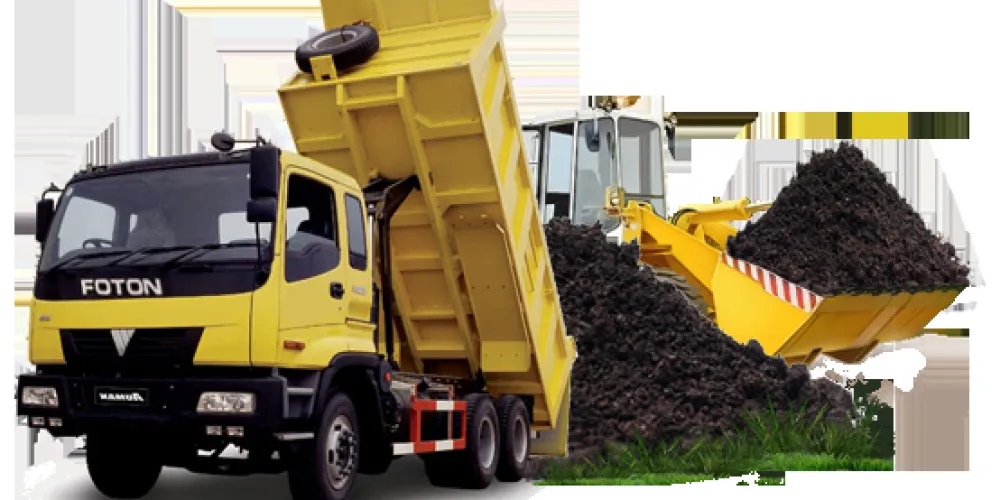
When should you use construction equipment rental? In construction, equipment plays a key role: without excavators, loaders, cranes, and other machines, it's hard to imagine effective work on a construction site.
However, project managers often face the question: is it better to rent equipment or buy it? In this article, we'll examine when renting construction equipment is the optimal solution and what advantages it offers.
Reducing Costs of Purchase and Maintenance
Purchasing construction equipment requires significant investment. Even for a large company, buying excavators, bulldozers, and other specialized equipment is a serious financial expense. Moreover, purchased equipment requires regular maintenance, repairs, and storage, which increases costs.
Renting allows you to avoid these expenses. You pay only for the actual use of equipment, without worrying about the cost of maintenance, repairs, and storage. This is especially important for small and medium-sized businesses, where every saving plays a significant role.
Flexibility and the Ability to Choose Equipment for Specific Tasks
Each construction project is unique and requires different equipment. If a company buys equipment, it is limited in its choice of models and types of machines. With renting, a wide variety is available — from mini-excavators for small sites to large cranes for high-rise projects. This allows you to adapt equipment to specific tasks, which is especially important for complex projects with different stages of work.
Moreover, renting allows you to always use modern equipment that meets the latest safety and efficiency standards.
No Costs for Storage and Transportation
Construction equipment is often bulky and requires special conditions for storage to avoid breakdowns and premature wear. This implies additional expenses for renting or equipping storage areas, as well as for securing the equipment.
With renting, these issues are automatically resolved: after completing the work, the equipment is returned to the company, and you don't need to worry about its storage and transportation.
Reducing Risks of Downtime and Breakdowns
One of the main problems for equipment owners is downtime due to machine breakdowns. Malfunctions can significantly delay work and lead to financial losses. With renting, such problems can be avoided: the landlord takes responsibility for keeping the equipment in good working condition. In case of a breakdown, the renter can promptly replace the equipment, minimizing the risk of downtime.
Exiting Difficult Financial Situations
When a company operates with a limited budget or is just starting on the construction market, purchasing specialized equipment may be an unaffordable task. Renting allows flexible planning of expenses without being tied to large loans or leasing agreements. This is especially important for seasonal work, when equipment is needed only during certain periods.
Applicable for One-time or Short-term Projects
If a company works on short-term or one-time projects, renting construction equipment becomes the most logical solution. There's no sense in purchasing expensive equipment for a project that will be completed in a few months. Renting allows you to use equipment only when it is actually needed and eliminates the need to sell it after completing the work.
Updating Equipment Fleet Without Additional Costs
Technology develops rapidly, and equipment becomes outdated. Companies that rent equipment always have access to the most modern models, which provide higher performance and safety. Updating their own fleet would require significant financial investment, which can be avoided with renting.
When is Renting Better Than Buying?
- Small-scale projects: if projects are small or short-term.
- Equipment needed for specific tasks: renting allows you to choose the right model for each job.
- Unstable financial situation: renting reduces initial costs and allows flexible budget management.
- Infrequent equipment use: for seasonal or one-time work, purchasing is not cost-effective.
- lack of storage space and maintenance equipment: renting eliminates expenses for storage and equipment maintenance.
Construction equipment rental is an optimal solution for many construction companies, especially those operating with limited budgets or temporary projects. It provides flexibility, reduces costs, and gives access to modern machines without the need for large investments.
Editorial team agronom.info
Materials are prepared by the portal's agronomists and editors. We use only trusted sources: Ukrainian agricultural universities, variety registries, open scientific publications.
Related articles

Not yet comments. Be the first!
Comments · 0