

Treflan 480
Доу АгроСайенсіс С.А.С., Друзенхайм, Франція
Herbicides
3
2
·
4.1K
3 offers
9.01 €per pack
Buy
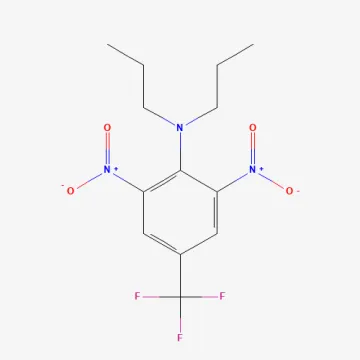
Trifluralin is a dinitroaniline herbicide known for its selective soil-applied mode of action. It primarily functions by inhibiting mitosis in the meristematic tissues of germinating weed seeds, effectively stopping the division of cells.
The active ingredient is absorbed by the roots and hypocotyls of emerging seedlings. By disrupting the formation of microtubules, it prevents the development of the root system, leading to the death of the weed before it emerges from the soil surface.
Due to its high volatility and low water solubility, Trifluralin requires immediate mechanical incorporation into the soil. This prevents the degradation caused by ultraviolet light and minimizes losses due to evaporation.
Once in the soil, it binds tightly to soil particles, creating a stable zone of protection. It does not leach deeply into the profile, remaining in the upper layers where the majority of weed seeds germinate, providing long-lasting control.
Trifluralin is strictly a pre-emergence herbicide. It has no effect on established or emerged vegetation, making it vital to apply the product at the correct timing relative to the weed growth cycle.
The primary use of Trifluralin is the control of annual grasses and select small-seeded broadleaf weeds. Key target species include barnyardgrass, foxtail species, crabgrass, and annual bluegrass.
It also provides control over some broadleaf weeds, such as common lambsquarters and chickweed, provided their seeds are in the topsoil and currently germinating during the time of treatment.
It is important to note that perennial weeds, especially those propagating through rhizomes or established root systems, are generally resistant to Trifluralin and will not be adequately controlled by standard applications.
Trifluralin is widely used in crops such as soybeans, sunflowers, canola, tomatoes, and cucurbits. The safety of the crop is ensured by planting the seeds below the treated soil layer, minimizing contact between the herbicide and the crop germ.
Field conditions are critical for efficacy; a well-prepared seedbed without large clods ensures uniform distribution of the herbicide and prevents areas where weeds could escape treatment.
Application is strictly pre-plant, followed by immediate mechanical incorporation into the soil at a depth of 5–7 centimeters. Tools like field cultivators or disk harrows are standard for this process.
Rates vary from 1.0 to 2.5 liters per hectare depending on soil texture and organic matter content. Lighter, sandy soils require lower doses, whereas heavier clay-loam soils require higher application rates to achieve biological efficacy.
Crop rotation requires careful planning due to the soil residual properties of Trifluralin. In some scenarios, sensitive follow-up crops may be affected if the application rate was high or if soil conditions limited degradation.
For best results, a two-pass incorporation method (tilling in two different directions) is recommended. This minimizes gaps in the treated area and ensures a consistent concentration of the herbicide in the weed germination zone.
Application should be performed under favorable weather conditions to prevent volatile loss before incorporation. Avoiding high midday heat is essential for maintaining the integrity of the product.
The most critical limitation is the requirement for immediate incorporation. If temperatures are high, volatile losses can occur within minutes, significantly reducing the herbicidal efficacy against target weeds.
Use is not recommended on soils with high organic matter (typically above 6%), as the organic particles bind the active ingredient, reducing the concentration available for weed control and decreasing the overall effect.
Worker safety is paramount. Appropriate personal protective equipment (PPE) must be worn during handling and application to avoid skin and eye irritation caused by exposure to the chemical vapors.
Proper storage is essential: the product must be kept in a well-ventilated area, protected from freezing temperatures and direct sunlight, as freezing can compromise the physical properties of the formulation.
Improper planting depth can lead to crop phytotoxicity. If seeds are sown too shallowly, they may come into contact with the herbicide layer, resulting in stunted growth or inhibition of the root system of the crop plant.
Not approved in the EU
EU status is for reference only and does not replace national registration in your country.


