

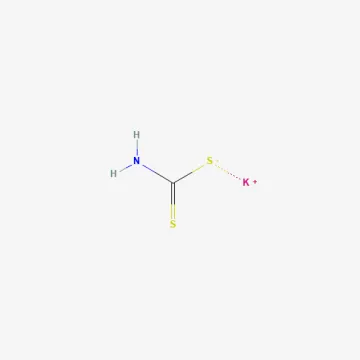
Active ingredient
Especially harmful
Potassium dithiocarbamate
Description
Mode of action
Potassium dithiocarbamates belong to the class of contact fungicides known for their preventive efficacy. These compounds operate by inhibiting critical enzymatic systems within fungal cells, specifically targeting cellular respiration.
The active mechanism involves the inactivation of sulfhydryl groups in enzymes essential for the survival and metabolic function of fungal pathogens. This metabolic disruption effectively prevents the germination of spores and inhibits mycelial growth.
Because these fungicides have a contact action, they form a protective barrier on the plant's surface. This physical and chemical layer prevents pathogens from successfully infecting plant tissues if the plant is treated in advance.
The chemical stability of these substances on plant surfaces allows for persistent protection, provided that the application provides uniform coverage of the leaves and stems. Their efficacy is best realized when applied as a prophylactic measure.
Due to their multi-site activity against various fungal enzymes, the development of pathogen resistance is significantly slower compared to single-site systemic fungicides, making them reliable tools in integrated pest management.
What it targets
This group of substances is extensively used to control a wide range of fungal diseases in agriculture. They are particularly effective against pathogens causing downy mildew, late blight, leaf spots, and rusts on various crops.
They provide protection across various stages of plant development, helping to manage infection levels in vegetables, orchard crops, and field commodities. Their broad-spectrum profile makes them versatile for many farming operations.
By preventing initial infections and reducing the spread of secondary inoculum, these fungicides help maintain healthy foliage and maximize overall crop yield, even under conditions favorable for disease development.
Beyond foliar application, some formulations within this category are utilized in soil treatment to suppress soil-borne fungal pathogens. This helps in securing the health of seedlings and preventing root decay.
Their broad range of activity allows for simplified disease control programs, reducing the need for multiple specialized products in certain agricultural scenarios.
Rates and timing
Application rates are determined by the specific crop type, the intensity of disease pressure, and the equipment used. It is essential to follow the label instructions carefully to ensure the correct concentration is achieved.
Spraying is the primary method of application, requiring adequate water volume to ensure thorough coverage of all plant surfaces. The intervals between applications generally range from one to two weeks depending on rainfall.
When preparing tank mixes, the compatibility with other pesticides and micronutrients must be assessed to avoid chemical degradation. High pH mixtures should generally be avoided to maintain the active substance stability.
Strict adherence to pre-harvest intervals is necessary to ensure that agricultural products meet residue safety standards. These intervals are strictly regulated to protect consumer health.
Field application should be optimized based on disease forecasting models, ensuring that the protective barrier is established before the pathogen establishes itself on the host plant.
Restrictions
A primary limitation of these contact fungicides is their vulnerability to wash-off by rain, which may necessitate repeat applications. Furthermore, they are ineffective against infections that have already penetrated the plant tissues.
Proper personal protective equipment is mandatory when handling these substances, including respiratory protection and chemical-resistant gloves, to prevent skin and eye irritation or inhalation of particles.
Environmental care must be taken during application to avoid drift into non-target areas and water bodies, as these substances can be toxic to aquatic life. Buffer zones are often required by local regulations.
Resistance management is crucial; therefore, rotating potassium dithiocarbamates with fungicides of different chemical classes is highly recommended to sustain their effectiveness over long-term agricultural use.
Storage should always occur in original containers, kept in a cool, dry, and secure location inaccessible to unauthorized personnel, children, or livestock to prevent accidental exposure.
Content graph
Connections · Potassium dithiocarbamate
Most often together:
Marketplace
Products · 3

