
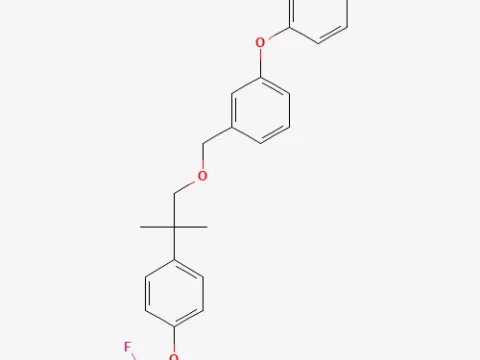
Halfenprox
Halfenprox belongs to the etheroxime chemical class and serves as a highly effective contact and stomach insecticide. Its primary mode of action is based on disrupting the nervous system of insect pests.
What the section contains
Halfenprox
The active ingredient causes paralysis by blocking the transmission of nerve impulses through its effect on sodium channels in cell membranes. This leads to the rapid cessation of feeding and the subsequent death of the insect shortly after exposure.
Due to its chemical structure, halfenprox exhibits significant ovicidal activity, preventing the development of eggs in many insect species. It also demonstrates antifeedant effects, deterring pests from treated plant parts.
The product is capable of quickly penetrating the insect cuticle, ensuring a high-speed knockdown effect. This makes it an essential tool for urgent control of massive pest outbreaks in agricultural fields.
The substance is relatively stable against sunlight and temperature fluctuations, which allows for the maintenance of a protective film on the leaf surface for an extended period after application.
Halfenprox effectively controls a broad spectrum of pests belonging to various orders, including Lepidoptera, Coleoptera, and Hemiptera.
Key targets for this substance include various species of aphids, whiteflies, thrips, and leaf-feeding caterpillars that cause significant damage to vegetable and industrial crops.
The product demonstrates high efficacy in mite control, which sets it apart from many other pyrethroid-class insecticides.
It is successfully used to protect fruit orchards, vineyards, and industrial vegetable plantations against both hidden and exposed pest organisms.
- Aphids (Aphididae)
- Whiteflies (Aleyrodidae)
- Lepidopteran caterpillars (Lepidoptera)
- Spider and fruit mites (Tetranychidae)
The application rates of the active ingredient vary depending on the pest species composition, infestation intensity, and the specific agricultural crop being treated.
For maximum effectiveness, it is recommended to conduct spraying during periods of mass larval emergence, when pests are most vulnerable to the insecticide's impact.
When used in tank mixes, it is essential to consider compatibility with other pesticides to avoid neutralizing the effect or causing chemical burns to the plants.
The number of treatments per season is strictly regulated to prevent the development of pest resistance; rotation with products from different chemical groups is recommended.
A mandatory condition is the uniform coverage of the leaf surface with the working solution, as the contact action of the substance requires direct contact with the insect.
Halfenprox is toxic to bees and other beneficial entomophagous insects; therefore, treatments should be conducted during hours of low pollinator activity.
Spraying is prohibited during the flowering period of honey-producing crops or in the vicinity of apiaries without strict adherence to buffer zone requirements.
When handling the product, it is necessary to strictly follow safety protocols and use personal protective equipment for the respiratory tract, skin, and mucous membranes.
The substance poses a risk to aquatic organisms; therefore, the drift of the product into water bodies, fisheries, and drinking water sources must be strictly prevented.
The disposal of containers and remaining working solution must be carried out in accordance with established environmental regulations prohibiting the contamination of soil and groundwater.