
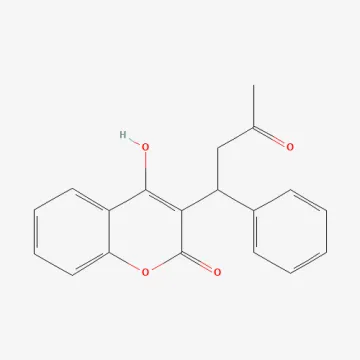
Warfarin
Description
Mode of action
Warfarin belongs to the chemical class of hydroxycoumarin derivatives. It is a highly effective indirect anticoagulant that blocks blood clotting processes in warm-blooded animals.
The mechanism of action is based on inhibiting the activity of vitamin K, which is essential for the synthesis of prothrombin and other clotting factors in the liver.
Upon systematic ingestion of the active substance by the pest, capillary integrity is compromised, leading to internal and external hemorrhaging.
Rodent mortality is not instantaneous but occurs several days after consuming the bait, which prevents "bait shyness" or wariness within the population.
The product has a significant cumulative effect, meaning that lethal results require continuous ingestion of the bait over several days.
What it targets
Warfarin is used exclusively as a rodenticide to control various types of synanthropic rodents.
The main target species include rats (Norway rats and roof rats) and house mice, which cause significant damage to agricultural assets.
It is applied to protect grain silos, storage facilities, livestock barns, and surrounding areas from rodent infestation.
It is effective in locations where feed, seeds, or finished agricultural goods prone to pest damage are stored.
- Norway rat (Rattus norvegicus)
- Roof rat (Rattus rattus)
- House mouse (Mus musculus)
Rates and timing
Warfarin formulations are most commonly presented as ready-to-use poisoned baits or concentrates for preparing such baits.
The content of the active ingredient in the bait is typically 0.025%, which is optimal for ensuring high palatability for the pests.
The application rate depends on the intensity of the rodent infestation and is distributed in portions along active rodent pathways.
Baits should be placed in designated bait stations or covered with materials to prevent access by domestic pets, livestock, or wildlife.
Bait stations should be checked weekly, and consumed portions must be replenished until bait consumption ceases entirely.
Restrictions
The use of warfarin requires strict adherence to safety protocols, as the substance is toxic to humans and domestic animals.
It is strictly prohibited to leave baits in open areas accessible to livestock, poultry, or children.
When handling the product, personal protective equipment must be worn, including gloves, overalls, and respirators to prevent skin and mucosal contact.
Dead rodents should be collected and disposed of by deep burial or incineration to prevent secondary poisoning of predators.
It is not recommended to leave baits in areas where they could contaminate food, animal feed, or drinking water supplies.
Status in the European Union
Not approved in the EU
- CAS number
- 81-81-2
- Category (EU)
- RO - Rodenticide
- Approved from
- 01.10.2006
- Approval until
- 31.03.2014
- ADI
- Not appl.
- ARfD
- Not appl.
- AOEL
- 0.0002 mg/kg bw/day
EU status is for reference only and does not replace national registration in your country.