

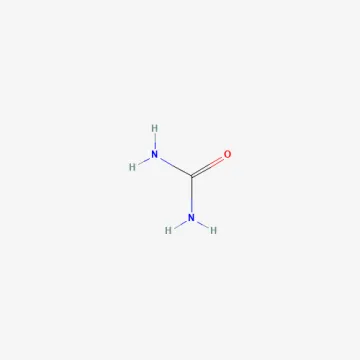
Description
Mode of action
Urea, also known as carbamide, is a highly concentrated nitrogen fertilizer containing approximately 46% nitrogen in an amide form. Once in the soil, the substance undergoes hydrolysis facilitated by the urease enzyme produced by soil microorganisms, transforming it into ammonium, which is then available for plant uptake.
A primary advantage of urea is its gradual nitrogen release, which provides a steady nutrient supply throughout the growing season. When applied as a foliar spray, urea penetrates the leaf cuticle quickly, stimulating essential metabolic processes such as photosynthesis and protein synthesis.
Beyond its nutritional role, urea exhibits pesticidal properties. High-concentration solutions are effective at suppressing overwintering fungal spores, such as apple scab or powdery mildew, and controlling dormant-stage pests when applied in early spring before bud break.
As an organic compound, urea is generally less phytotoxic than other inorganic nitrogen sources when applied correctly. However, excessive concentrations can lead to leaf burn due to protein denaturation, necessitating careful calibration of the working solution strength.
The efficiency of urea is highly dependent on environmental factors, particularly soil moisture and temperature. Since the hydrolysis process relies on microbial activity, dry conditions can slow down nitrogen conversion, requiring immediate incorporation into the soil to prevent gaseous ammonia loss.
What it targets
Urea is widely used for fertilizing a diverse range of crops, including cereals, industrial crops, vegetables, and fruit trees. It effectively corrects nitrogen deficiency, which typically manifests as stunted growth and chlorosis of older leaves.
In orchards, urea serves as a critical tool for disease management. Late autumn or early spring treatments help reduce the infection pressure by eliminating pathogens hiding in fallen leaves and bark crevices, significantly improving overall tree health.
The fertilizer is essential for promoting rapid vegetative growth. Nitrogen is a key building block for chlorophyll, amino acids, and nucleic acids, all of which are vital for maximizing crop yield and ensuring high-quality produce.
Urea is also utilized to accelerate the decomposition of crop residues. By providing an easily accessible nitrogen source for decomposer microorganisms, it prevents nitrogen immobilization in the soil and improves the breakdown of straw and other plant materials.
- Winter cereals
- Fruit trees (pome and stone)
- Vegetable crops
- Turf and lawns
Rates and timing
For soil application, rates typically range from 100 to 300 kg/ha depending on the crop type and soil fertility levels. It is crucial to incorporate the fertilizer into the soil to a depth of 5–10 cm within 24 hours of application to minimize nitrogen loss.
Foliar application involves using a solution concentration ranging from 0.5% to 3% (5–30 kg per 1000 liters of water). These treatments are best performed in the cool hours of the early morning or evening to prevent leaf injury from excessive sun and heat.
For eradicative orchard treatments, a 5–7% concentration (500–700 g per 10 liters of water) is applied during the dormancy phase. This method is highly effective for reducing populations of overwintering mites and insect larvae.
When used for residue decomposition, apply 5–10 kg of urea per tonne of crop residue. This encourages rapid microbial activity, helping to maintain soil structure and preventing nutrient depletion during the breakdown process.
The timing of urea application is critical and should align with the crop's active growth phases. Basal application occurs before planting, while top-dressing is typically done during early vegetative stages to support peak development before flowering.
Restrictions
The main limitation is the risk of nitrogen loss through ammonia volatilization, especially when urea is applied to the soil surface without incorporation, particularly in warm or alkaline soil conditions.
Mixing urea with alkaline compounds like lime, dolomite, or certain superphosphates should be avoided as it can trigger chemical reactions that degrade the fertilizer or cause clumping, making even application impossible.
When applying as a foliar spray, always be mindful of plant sensitivity. Different crops and growth stages react differently to urea solutions; therefore, performing a small-scale pilot application is recommended before treating large areas.
Long-term exclusive use of urea can lead to soil acidification. Periodic soil testing and liming are necessary to maintain optimal pH levels, ensuring that the root system functions efficiently and nutrients remain available to the plants.
Storage requires cool, dry conditions with strictly controlled humidity. Urea is highly hygroscopic and will absorb moisture from the air, causing the granules to stick together and form hard lumps, which complicates mechanical application.
Regulatory
Status in the European Union
Approved in the EU
- CAS number
- 57-13-6
- Approved from
- 01.05.2024
- Approval until
- 30.04.2039
- ADI
- Not appl.
- ARfD
- Not appl.
- AOEL
- Not appl.
EU legislation
EU status is for reference only and does not replace national registration in your country.
Content graph
Connections · Urea
Most often together:
Marketplace