

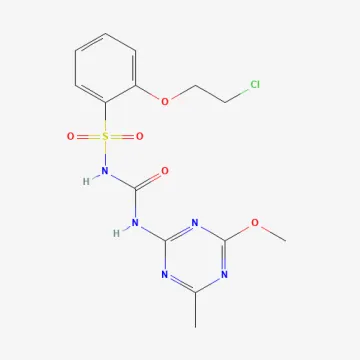
Description
Mode of action
Triasulfuron belongs to the sulfonylurea chemical class and acts as a systemic herbicide. It is absorbed primarily through leaves and roots of weeds.
Once inside the plant, it translocates through the phloem and xylem to active meristematic tissues. It inhibits the enzyme acetolactate synthase, essential for the synthesis of valine and isoleucine.
The inhibition of these vital amino acids causes rapid growth cessation in susceptible weed species immediately after the herbicide application.
Plant death occurs gradually within 1 to 3 weeks, starting with chlorosis and necrotic spots at the growing points, eventually leading to full plant collapse.
Cereal crops like wheat and barley possess high selectivity because they efficiently metabolize triasulfuron into non-toxic compounds, ensuring crop safety.
What it targets
Triasulfuron is primarily used for controlling broad-leaved weeds in cereal crops, including wheat and barley.
It is particularly effective against species such as wild mustard, chickweed, shepherd's purse, and various types of polygonum.
The product shows excellent efficacy against young, actively growing weeds during their early developmental stages.
It helps in maintaining high crop yields by reducing competition for light, water, and nutrients from aggressive weed populations.
In many agricultural regions, it is used in tank mixes to manage a broader range of weeds and to prevent the development of resistant biotypes.
Rates and timing
Application rates generally range from 5 to 20 grams of active ingredient per hectare, depending on the weed spectrum and density.
Optimal timing for application is during the tillering stage of the cereal crop, when weeds are small and vulnerable to the herbicide.
Successful application requires uniform coverage of the field, which can be achieved through properly calibrated spraying equipment.
Temperature range for effective activity is between +5 and +25 degrees Celsius, while extreme drought conditions may reduce product uptake.
Surfactants are often recommended to improve adherence and penetration, especially when weed leaf surfaces are covered in thick wax layers.
Restrictions
Due to its soil persistence, triasulfuron has significant rotational restrictions. It is essential to check crop safety intervals before planting sensitive crops.
Growing broad-leaved crops such as sunflowers or sugar beets in the following season on treated fields may be risky and requires adherence to manufacturer guidelines.
Operators must wear appropriate personal protective equipment including gloves, respirators, and goggles during handling and application.
Spray drift must be strictly avoided as even small amounts can cause severe phytotoxic damage to sensitive non-target crops nearby.
- Clean spray equipment thoroughly after use to avoid cross-contamination.
- Keep the product in a dry, well-ventilated storage area.
- Consult local regulations regarding safe pesticide application practices.
Regulatory
Status in the European Union
Not approved in the EU
- CAS number
- 82097-50-5
- Category (EU)
- HB - Herbicide
- Approved from
- 30.09.1996
- Approval until
- 30.06.2016
Hazard classification (CLP)
Aquatic Acute 1 - H400Aquatic Chronic 1 - H410
EU legislation
EU status is for reference only and does not replace national registration in your country.
Content graph
Connections · Triasulfuron
Most often together:
Marketplace
Products · 7


BIATALON
Шанхай Агрочайна Інтернешнел Трейд Ко., Лтд., Шанхай, Китай.
Herbicides
0
0
·
59
No offers
—
Details