
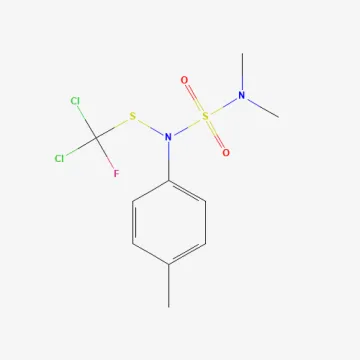
Description
Mode of action
Tolylfluanid is a contact fungicide belonging to the sulfamide chemical class. It acts as a preventative treatment, forming a protective film on plant surfaces to block fungal pathogen development.
The mechanism of action involves the inhibition of key enzymes within fungal cells, specifically disrupting protein metabolism and essential amino acid processes.
Because the substance does not exhibit systemic mobility, it remains on the plant cuticle, preventing fungal spores from germinating upon contact.
A notable feature of tolylfluanid is its strong adhesion to leaf and fruit surfaces, which provides good resistance to wash-off by rain and ensures prolonged protective durability.
As the plant grows, new tissues remain unprotected, making regular re-application necessary to maintain effective control against fungal infections during the season.
What it targets
This substance is widely used to manage a variety of fungal diseases that impact the yield and quality of horticultural and agricultural crops.
Its primary application is the control of grey mold (Botrytis cinerea), a persistent pathogen affecting berries, grapes, and various vegetable crops.
Additionally, tolylfluanid is effective against several types of leaf spots and downy mildew, providing a versatile tool for integrated pest management programs.
The use of this fungicide is particularly critical during the flowering and fruit-ripening stages, when crops are most susceptible to fungal rot.
- Grey mold (Botrytis)
- Downy mildew
- Leaf spot diseases
- Fruit rot in berries
- Fungal infections in ornamental plants
Rates and timing
Application rates for tolylfluanid depend on the specific crop type, the intensity of the disease pressure, and the method of application equipment used.
Treatments are most effective when applied preventively, just before or at the onset of conditions favorable to fungal development.
Complete and uniform coverage of the plant surface is vital for success, as the substance only protects the areas it directly contacts during spraying.
Farmers must adhere to mandated pre-harvest intervals to ensure that residue levels in the final agricultural product remain within safe legal limits.
When mixing with other agrochemicals, ensure compatibility to maintain the physical stability of the mixture and prevent potential phytotoxic side effects on crops.
Restrictions
Tolylfluanid requires the use of standard personal protective equipment, including gloves, goggles, and protective clothing, to prevent dermal and inhalation exposure.
The substance is toxic to aquatic organisms, and therefore, it must not be applied near water bodies, drainage ditches, or areas with high risk of runoff.
Avoid spray drift toward non-target areas and sensitive neighboring crops, especially under windy conditions that may carry the particles away.
Storage should be in a cool, well-ventilated, and secured area to prevent access by unauthorized personnel, children, and domestic animals.
Users must comply with local agricultural regulations regarding application frequency and total seasonal dosage to avoid environmental accumulation.
Content graph
Connections · Tolylfluanid
Most often together:
Marketplace
Products · 2
