

Description
Mode of action
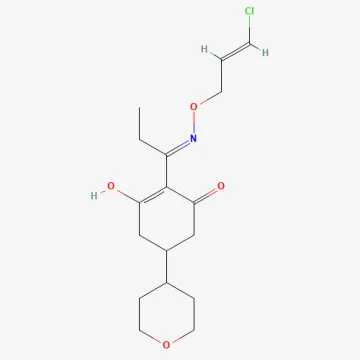
Tepraloxydim belongs to the cyclohexanedione chemical class. It is a selective systemic herbicide that is efficiently absorbed by the aerial parts of weed plants.
The mode of action is based on the inhibition of the acetyl-CoA carboxylase (ACCase) enzyme. This enzyme plays a vital role in fatty acid biosynthesis within the cells of grass plants.
Blocking lipid synthesis leads to the cessation of meristematic tissue growth shortly after application. The disruption of cell membrane integrity results in the rapid death of the weed.
The compound exhibits high selectivity, allowing its use for protecting broad-leaved crops from grass weeds without the risk of phytotoxicity to the main crop.
Visible symptoms of weed damage, such as chlorosis and necrosis of growing points, appear within a few days after herbicide application.
What it targets
Tepraloxydim is primarily used against a broad spectrum of annual and perennial grass weeds.
- Avena fatua (Wild oat)
- Echinochloa crus-galli (Barnyard grass)
- Setaria species (Foxtail)
- Elymus repens (Couch grass)
- Cynodon dactylon (Bermuda grass)
The efficacy of the compound remains high even against weeds at different growth stages, although young plants are the most susceptible.
Due to its specific nature, this substance does not show herbicidal activity against dicotyledonous plants, making it suitable for tank mixes.
Rates and timing
Application timing is linked to the weed growth stage. The optimal period is during active growth, when grasses have 2 to 6 leaves.
Application rates vary depending on the weed species composition and the density of infestation per hectare.
When controlling perennial grasses like couch grass, adhering to the upper dosage limit is necessary to ensure deep penetration of the active ingredient into the root system.
An important condition for efficacy is the absence of stress factors, such as drought or frost, which slow down plant metabolism.
To improve the penetration of the active ingredient into the spray solution, the addition of surfactants or mineral oils is often recommended to enhance adhesion.
Restrictions
Tepraloxydim should not be applied if rainfall is expected within 2 to 4 hours, as this may reduce biological efficacy.
It is not recommended to mix the product with certain herbicides targeting broad-leaved weeds due to potential antagonism that may reduce effectiveness against grasses.
Strict adherence to crop rotation regulations is required, although the half-life of tepraloxydim in the soil generally allows for subsequent crops without significant restrictions.
Personal protective equipment must be used when handling the substance to prevent contact with the skin and mucous membranes.
Storage should be in original containers in dry, ventilated areas, protected from direct sunlight and kept out of reach of children.
Content graph
Connections · Tepraloxydim
Most often together:
Marketplace
Products · 2
