
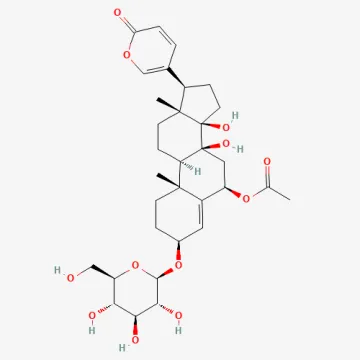
Scilliroside
Description
Mode of action
Scilliroside is a cardiac glycoside extracted from the bulbs of the sea squill (Drimia maritima). It functions as a potent and specific rodenticide.
The mechanism of action involves the inhibition of the sodium-potassium ATPase enzyme, which is critical for the function of cardiac and muscular cells, leading to rapid heart failure.
A key biological feature of scilliroside is its high selectivity. Due to the specific physiology of the gastrointestinal tract, rodents lack an effective emetic reflex, which prevents them from purging the toxin.
The substance is absorbed into the bloodstream quickly, causing paralysis and death in a short timeframe, which is advantageous for rapid pest population control.
As a natural compound, it is often favored for its efficacy against rodent populations that have developed resistance to modern synthetic anticoagulant poisons.
What it targets
Scilliroside is utilized as an active ingredient in rodenticidal products designed to manage populations of various harmful rodent species.
Common targets include house mice, black rats, brown rats, and other synanthropic rodents that damage agricultural stocks and food storage facilities.
It is specifically recommended in agricultural settings where rodent populations show reduced susceptibility to standard anticoagulant rodenticides.
The product provides high efficacy in confined agricultural spaces and storage facilities where fast-acting results are required to protect harvested crops.
Usage in open agricultural fields is strictly restricted to minimize risks to non-target wildlife and to comply with environmental protection guidelines.
Rates and timing
Application rates are determined by the concentration of the active ingredient within the prepared bait and the density of the rodent infestation.
Baits are formulated using food-based substrates that are highly palatable to rodents, with the active ingredient incorporated according to precise formulation standards.
Bait stations or secure containers are placed along rodent runways and nesting areas to ensure the highest probability of consumption by the target pests.
The duration and frequency of baiting are dictated by ongoing monitoring of rodent activity and the rate of bait depletion in the stations.
Continuous baiting is essential to ensure that all members of the local rodent population are exposed to the toxicant until complete control is achieved.
Restrictions
Personnel handling scilliroside-based products must wear appropriate personal protective equipment, including gloves and masks, to prevent accidental exposure.
It is strictly prohibited to place baits in areas where they could contaminate drinking water, animal feed, or food products intended for human consumption.
Access for non-target animals, pets, and children must be prevented through the use of tamper-resistant bait stations located in inaccessible areas.
In case of contact with the skin or eyes, immediate flushing with clean water is necessary, followed by medical evaluation if symptoms occur.
Unused bait and contaminated packaging must be disposed of in accordance with local environmental regulations concerning hazardous agricultural materials.
Status in the European Union
Not approved in the EU
- CAS number
- 507-60-8
- Category (EU)
- RO - Rodenticide
EU status is for reference only and does not replace national registration in your country.