

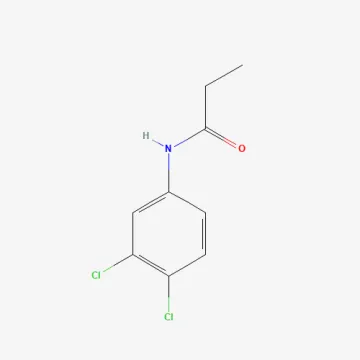
Description
Mode of action
Propanil belongs to the amide chemical class and acts as a selective contact herbicide. Its primary purpose in agriculture is to inhibit photosynthesis in target weed species.
Upon contact with leaf tissues, the active ingredient interferes with electron transport within photosystem II. This process effectively halts carbohydrate synthesis, leading to the rapid necrosis of weed foliage.
Because propanil lacks systemic activity, it does not translocate within the plant vascular system. Consequently, complete and thorough spray coverage is essential to ensure that every part of the weed is sufficiently treated.
Selectivity is achieved because crop plants, particularly rice, possess specific enzymes that rapidly metabolize propanil into non-toxic compounds, protecting the crop from injury.
The substance undergoes rapid microbial degradation in the soil, which prevents its accumulation and makes it a favorable option for sustainable agricultural practices without impacting subsequent crops.
What it targets
Propanil is primarily utilized for the management of annual broadleaf and grass weeds in rice paddies and field crops.
The herbicide is highly effective against common agricultural threats such as barnyard grass (Echinochloa crus-galli), foxtail, and other grass species that compete with rice for resources.
Optimal efficacy is achieved when targeting young weed seedlings, generally at the 1 to 4-leaf growth stage, as they are most susceptible to the herbicide's contact mechanism.
Propanil shows limited performance against established perennial weeds with deep root systems, as its contact-only nature prevents it from affecting dormant underground vegetative structures.
In cases of heavy infestation or more mature weeds, agricultural experts often incorporate propanil into tank mixes with other selective herbicides to broaden the spectrum of controlled species.
Rates and timing
Application rates for propanil are dictated by the specific weed spectrum present, the density of the infestation, and the growth stage of the rice crop.
Timing is critical; applications must be scheduled according to the development of the weeds, as delaying the procedure often leads to a significant decrease in control levels.
Effective application requires calibrated ground or aerial spraying equipment to ensure uniform droplet distribution and full coverage of the plant surface.
Environmental conditions, particularly temperature, must be considered; spraying should occur when temperatures are within an optimal range to avoid crop stress and ensure active metabolism.
Consulting product-specific labels is essential, as various formulations and concentrations require precise dilution rates to ensure both safety and high performance.
Restrictions
The application of propanil is sensitive to extreme temperatures; it is generally discouraged to spray during periods of cold (below 15-18°C) or extreme heat (above 30°C).
Avoid applying the herbicide if rain is forecasted shortly after the treatment, as rainfall can wash the contact substance off the foliage before it is absorbed.
Strict intervals must be maintained when applying propanil in combination with other chemicals, especially organophosphate insecticides, to prevent phytotoxicity to the rice plants.
Personal Protective Equipment (PPE) is mandatory when handling the chemical to protect the applicator from dermal exposure and inhalation hazards.
Water quality used for tank mixing is paramount; clear, clean water is required to avoid nozzle clogging and to maintain the stability of the active ingredient.
Regulatory
Status in the European Union
Not approved in the EU
- CAS number
- 709-98-8
- Category (EU)
- HB - Herbicide
- ADI
- 0.02 mg/kg bw/day
- ARfD
- 0.07 mg/kg bw
- AOEL
- 0.02 mg/kg bw/day
Hazard classification (CLP)
Acute Tox. 4 - H302Aquatic Acute 1 - H400
EU legislation
EU status is for reference only and does not replace national registration in your country.
Content graph
Connections · Propanil
Most often together:
Marketplace