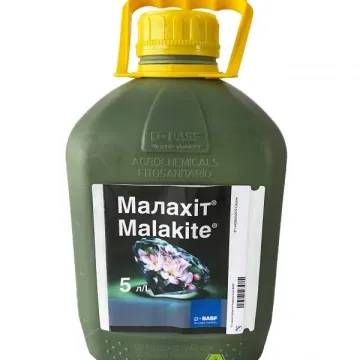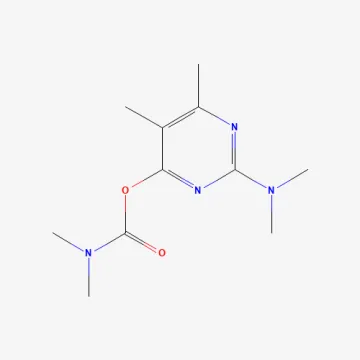
Description
Mode of action
Pyrimethanil belongs to the anilinopyrimidine chemical class. It acts as a systemic fungicide with the unique capability of inhibiting the secretion of enzymes by the pathogen that are essential for the infection process of plant tissues.
The primary mechanism of this active ingredient is the suppression of hydrolytic enzymes produced by the fungus. Consequently, the pathogen loses the ability to penetrate the plant cell wall, leading to the inhibition of mycelial growth and subsequent death of the pathogen.
The substance exhibits high activity in the gas phase. This allows the fungicide to affect pathogens even without direct contact with the spray droplets, which is particularly beneficial in dense crop canopies where coverage is challenging.
It penetrates the leaf cuticle rapidly and distributes translaminarly, providing protection for both the upper and lower surfaces of the leaves. Pyrimethanil also offers significant curative effects during the early stages of fungal colonization.
The fungicide shows excellent resistance to rain-washing within two hours of application. This makes it an indispensable tool for protecting orchards and vineyards in regions characterized by unpredictable weather patterns.
What it targets
Pyrimethanil is a specialized fungicide designed to combat pathogens from the Ascomycetes and Deuteromycetes classes. It is most effective against gray mold (Botrytis cinerea).
Major crops treated with this substance include grapes, apples, pears, tomatoes, cucumbers, and various other vegetable crops in both open and protected ground. It is also used on strawberries and stone fruits.
In addition to gray mold, pyrimethanil effectively controls apple and pear scab. Its inclusion in orchard protection programs significantly reduces the risk of fruit damage during long-term storage.
Its efficacy against various leaf spots and rot diseases makes it a versatile tool for professional horticulture. It also helps prevent the development of molds on fruits during transit and post-harvest.
The systemic action of pyrimethanil allows for both preventive applications and curative interventions upon the first signs of disease, effectively blocking further spread within the field.
Rates and timing
Application rates vary depending on the crop, infection pressure, and method of delivery. On average, field crop rates range from 0.6 to 1.2 liters of formulated product per hectare.
For vineyard applications, higher rates are generally required to ensure thorough coverage of the large vegetative mass. Pre-harvest intervals typically range from 7 to 21 days depending on local regulatory requirements.
To achieve maximum efficacy, it is recommended to apply the fungicide before the onset of epidemic disease development. Prophylactic sprays help minimize crop losses and reduce the overall pesticide load over the season.
The number of applications per season is strictly limited to prevent the development of resistance in pathogens. It is advised not to conduct more than two to three consecutive treatments with pyrimethanil in one rotation.
The spray solution should be prepared immediately before use using clean water. It is essential to ensure uniform wetting of all plant surfaces to reach the optimal therapeutic impact.
Restrictions
Pyrimethanil is classified as having moderate toxicity to mammals. When handling the product, strict adherence to safety protocols is mandatory, including the use of protective clothing, gloves, and respiratory protection.
A critical limitation is the risk of resistance buildup if the product is used indiscriminately. It is recommended to rotate pyrimethanil with fungicides from different chemical groups that possess alternative modes of action.
The substance poses a hazard to aquatic life. Ensure that spray residues and wash water do not enter water bodies, drainage systems, or areas inhabited by beneficial non-target organisms.
Temperature during application is significant, as pyrimethanil is particularly effective at lower temperatures compared to many other fungicides. This enables its use in early spring when early infection risks are present.
The product must be stored in its original sealed container in a cool, dry warehouse, kept away from children, pets, and food or feed supplies.
Regulatory
Status in the European Union
Approved in the EU
- CAS number
- 23103-98-2
- Category (EU)
- IN - Insecticide
- Approved from
- 01.02.2007
- Approval until
- 31.10.2026
- ADI
- 0.035 mg/kg bw/day
- ARfD
- 0.1 mg/kg bw
- AOEL
- 0.035 mg/kg bw/day
Hazard classification (CLP)
Acute Tox. 3 - H301Acute Tox. 3 - H331Aquatic Acute 1 - H400Aquatic Chronic 1 - H410Carc. 2 - H351Skin Sens. 1 - H317
EU legislation
EU status is for reference only and does not replace national registration in your country.
Content graph
Connections · Pyrimethanil
Most often together:
Marketplace
Products · 15