

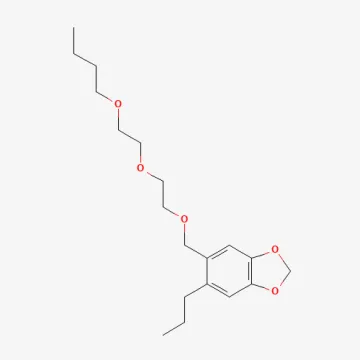
Description
Mode of action
Piperonyl butoxide (PBO) is a classic synergist that does not possess significant insecticidal activity on its own. Its primary role involves modifying metabolic processes within the insect organism.
The substance inhibits the activity of microsomal cytochrome P450 enzymes, which are responsible for the oxidative degradation of toxic compounds inside the pest's body. Consequently, insecticides, such as pyrethroids, degrade much slower.
This action significantly increases the biological availability of the primary toxin, allowing for a lethal effect to be achieved with much lower doses of the pesticide.
This mechanism allows for overcoming resistance in many insect species to traditional poisons, as the pathways used by the pest to neutralize the pesticide are effectively blocked.
The synergist provides a rapid "knockdown effect," which is critical for controlling highly mobile or hidden insects under field conditions and during post-harvest storage.
What it targets
The compound is used in tank mixes and combined formulations against a wide range of harmful insects: Lepidoptera, Coleoptera, and Diptera.
It is indispensable for controlling stored-product pests in grain storage facilities, as it enhances the action of contact insecticides penetrating the insect cuticle.
It is effective against household pests, including cockroaches, ants, and flies, where enhanced activity of pyrethroid compounds is required.
It is applied to protect vegetable, field, and fruit crops where minimizing pesticide load on soil and plants is a priority.
It plays a vital role in IPM programs targeting insects that have developed resistance to traditional organophosphate or pyrethroid insecticides.
Rates and timing
Application rates for piperonyl butoxide depend strictly on the concentration of the primary active ingredient used alongside it. Most commonly, the ratio of synergist to insecticide ranges from 5:1 to 10:1.
Timing for application coincides with the recommended window for the primary insecticide. It is crucial to consider the pest's life cycle to achieve maximum solution efficacy.
When treating empty grain storage facilities, dosages are determined based on surface area and volume, adhering strictly to the manufacturer's regulatory guidelines.
Under field conditions, the number of applications must be limited to prevent the accumulation of residual active ingredients in the harvested produce.
When preparing tank mixtures, it is necessary to conduct a compatibility test to prevent precipitation or reduction in the activity of the mixture components.
Restrictions
Piperonyl butoxide is sensitive to ultraviolet radiation; therefore, applications are recommended during early morning or evening hours when sunlight intensity is low.
Exceeding established sanitary norms when treating food storage facilities is prohibited to prevent product contamination.
Adherence to pre-harvest intervals is mandatory, as the synergist may slow down the natural breakdown of active substances within plant tissues.
When working with preparations based on piperonyl butoxide, personal protective equipment for respiratory, skin, and eye protection is required, as synergists can increase toxicity upon human exposure.
Storage must be in dry, cool locations, excluding direct sunlight and access by unauthorized persons or animals.
Content graph
Connections · Piperonyl butoxide
Most often together:
Marketplace


