

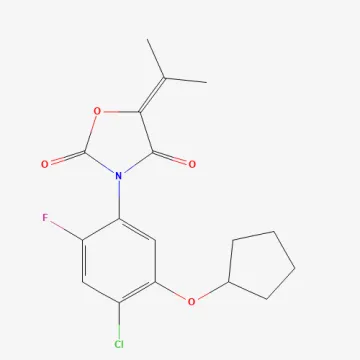
Description
Mode of action
Pentoxazone belongs to the oxazolidinone chemical class and acts as a highly effective selective herbicide. It interferes with weed metabolic processes by inhibiting the enzyme protoporphyrinogen oxidase.
As a result of this enzyme inhibition, toxic intermediates accumulate within the tissues of susceptible weeds, triggering rapid lipid peroxidation of cell membranes.
This leads to the breakdown of cellular structures, chlorophyll loss, and the subsequent death of weeds, manifesting as necrosis and tissue desiccation.
The substance is absorbed primarily through the seedlings and roots of weeds, making its efficacy dependent on proper distribution within the surface soil layer or water column.
Pentoxazone exhibits excellent selectivity, as rice plants possess the ability to rapidly metabolize and neutralize the active ingredient, remaining unaffected by the treatment.
What it targets
The primary use of pentoxazone is the protection of rice crops against a broad spectrum of weeds. The product is highly effective against various grass and broad-leaved weeds.
Target species include hard-to-control weeds such as barnyard grass (Echinochloa species), various sedges, and other aquatic weeds typical of flooded field systems.
It successfully suppresses weeds at early growth stages, allowing the rice crop to establish a robust root system without competition for essential nutrients.
The active ingredient provides stable results in flooded fields by remaining in the upper water and soil layers, where weed seed germination is most intense.
Using this herbicide significantly reduces field weed pressure, which is critical for ensuring high rice yields in intensive cultivation technologies.
Rates and timing
Application rates of pentoxazone vary depending on soil type, the intensity of weed infestation, and the specific formulation used by the agricultural producer.
Treatment is typically performed by applying the product into the irrigation water of the fields or by spraying the soil surface before crop emergence or at early weed growth stages.
To achieve maximum protective efficacy, it is necessary to maintain a specific water level in the field for several days post-application to ensure uniform herbicide distribution.
Adherence to temperature guidelines and avoiding heavy rainfall immediately after application is crucial to maintain the required concentration of the active ingredient in the action zone.
It is recommended to monitor weed status prior to field operations to adjust the dosage and determine the optimal timing for product application.
Restrictions
When handling pentoxazone, it is mandatory to use standard personal protective equipment, including gloves, respirators, and protective clothing, to prevent skin contact.
Prevention of runoff into fisheries and water bodies is essential, as the substance may pose risks to aquatic organisms at high concentrations.
Following application, established re-entry intervals must be observed before allowing manual or mechanical work in the field to ensure personnel safety.
Storage should be conducted in dry, cool, and ventilated warehouses specifically designated for pesticides, away from food, beverages, and animal feed.
Disposal of packaging and residual spray solutions must strictly comply with current environmental regulations and legislation concerning hazardous waste management.
Regulatory
Status in the European Union
Not approved in the EU
- CAS number
- 110956-75-7
- Category (EU)
- HB - Herbicide
EU status is for reference only and does not replace national registration in your country.
Content graph
Connections · Pentoxazone
Most often together:
Marketplace