

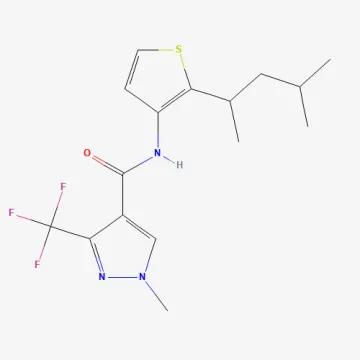
Description
Mode of action
Penthiopyrad belongs to the pyrazole-carboxamide chemical class and acts as a highly effective systemic fungicide. According to its biological mechanism, the substance is classified as a succinate dehydrogenase inhibitor (SDHI), corresponding to group 7 in the FRAC classification.
The active ingredient blocks the mitochondria of the pathogenic fungus, inhibiting the respiration process and energy production within the pathogen's cells. Without access to cellular energy, the development of the pathogen ceases immediately.
The substance demonstrates excellent translaminar mobility, quickly penetrating plant leaf tissues. This allows penthiopyrad to redistribute within the plant, providing protection even to areas that were not directly hit during spraying.
Due to its high lipophilicity, penthiopyrad effectively adheres to the waxy cuticle of plants and remains resistant to rainfall washing. This ensures a prolonged protective effect under field conditions.
The product shows activity across all life cycle stages of fungi, but it exerts the most pronounced effect during spore germination and mycelial growth, making it an essential tool for preventive plant protection.
What it targets
Penthiopyrad is effective against a broad spectrum of pathogens, including powdery mildew, rust, alternaria, and various types of rot. It demonstrates consistently high results in controlling pathogens that have developed resistance to other fungicide groups.
The main target crops for application include vegetables (tomatoes, cucumbers, onions), potatoes, cereals, and fruit trees. The fungicide is widely used for protecting vineyards against powdery mildew and grey mold.
Rates and timing
The timing of application depends on the crop growth stage and phytosanitary conditions. Treatments are usually conducted during periods of active growth or upon the first signs of disease, according to specific regulations for each crop.
Application rates vary depending on the level of infection and weather conditions. It is crucial to monitor the frequency of treatments to avoid the development of resistance in pathogens against SDHI fungicides.
Restrictions
It is not recommended to conduct more than two treatments per season using the same product from the SDHI group. To manage resistance effectively, it is advised to alternate with fungicides from different chemical classes.
When handling penthiopyrad, standard personal protective equipment must be used. The substance has low toxicity to mammals, but it requires compliance with safety zones around water bodies and beehives.
Regulatory
Status in the European Union
Not approved in the EU
- CAS number
- 183675-82-3
- Category (EU)
- FU - Fungicide
- Approved from
- 01.05.2014
- Approval until
- 31.10.2025
- ADI
- 0.1 mg/kg bw/day
- ARfD
- 0.75 mg/kg bw
- AOEL
- 0.1 mg/kg bw/day
Hazard classification (CLP)
Aquatic Acute 1 - H400Aquatic Chronic 1 - H410
EU legislation
EU status is for reference only and does not replace national registration in your country.
Content graph
Connections · Penthiopyrad
Most often together:
Marketplace
Products · 2
