

Description
Mode of action
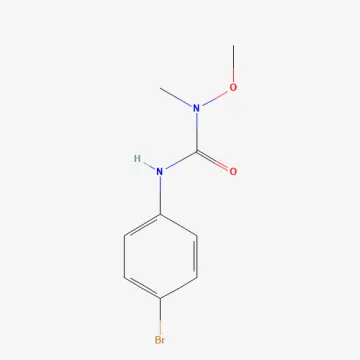
Metobromuron belongs to the phenylurea chemical class and acts as a selective systemic herbicide primarily absorbed by the roots of target plants.
The core mechanism of action involves the inhibition of photosynthesis by blocking the Hill reaction, which disrupts electron transport within the chloroplasts.
Once absorbed, the active ingredient translocates acropetally through the xylem, accumulating in the active growth points of susceptible weeds.
This disruption of metabolic processes leads to the cessation of growth and subsequent chlorosis and necrosis of the plant tissues.
Metobromuron provides residual soil activity, protecting crops during the critical early stages of development by preventing the emergence of new weed flushes.
What it targets
Metobromuron is primarily utilized for the control of a wide range of annual broad-leaved weeds and some grass species in agricultural crop production.
It is particularly effective against species such as Amaranthus retroflexus, Chenopodium album, Capsella bursa-pastoris, and Stellaria media.
The herbicide target includes weeds at their germination or early seedling stage, ensuring a clean field during the initial crop establishment.
It is most frequently applied in potato cultivation, where it provides excellent selective control without causing damage to the developing tubers.
- Amaranthus retroflexus
- Chenopodium album
- Capsella bursa-pastoris
- Stellaria media
- Sinapis arvensis
Rates and timing
The standard timing for application is pre-emergence, specifically after planting the crop but before the emergence of the potato sprouts.
Application rates are dictated by soil type and organic matter content, with lighter, sandy soils requiring lower doses compared to heavy, humus-rich soils.
Adequate soil moisture is essential for optimal performance, as it facilitates the uptake of the active ingredient by the developing weed root systems.
The solution should be applied evenly across the field to ensure a uniform herbicide barrier, which is vital for long-term residual effectiveness.
Post-application tillage should be avoided, as disturbing the soil surface will break the herbicide layer and significantly reduce the level of control.
Restrictions
Mechanical cultivation following the application of Metobromuron is prohibited to maintain the integrity of the protective chemical barrier on the soil surface.
Avoid application on extremely dry or parched soils, as the lack of moisture prevents the herbicide from being properly absorbed by weed roots.
Crop rotation protocols must be strictly followed, as residues may persist in the soil and affect subsequent sensitive rotational crops.
Environmental conditions, particularly heavy rainfall shortly after application, should be considered to avoid potential leaching or crop injury.
Operators must adhere to safety precautions, including the use of protective gear, to minimize exposure during handling and application processes.
Regulatory
Status in the European Union
Approved in the EU
- CAS number
- 3060-89-7
- Category (EU)
- HB - Herbicide
- Approved from
- 01.01.2015
- Approval until
- 31.05.2027
- ADI
- 0.008 mg/kg bw/day
- ARfD
- 0.3 mg/kg bw
- AOEL
- 0.016 mg/kg bw/day
EU legislation
EU status is for reference only and does not replace national registration in your country.
Content graph
Connections · Metobromuron
Most often together:
Marketplace
Products · 3

