
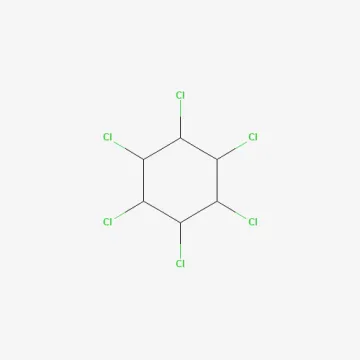
Lindane
Description
Mode of action
Lindane (the gamma-isomer of hexachlorocyclohexane) belongs to the class of organochlorine compounds. It acts as a contact, stomach, and fumigant insecticide targeting the nervous system of insects.
The substance triggers convulsions and paralysis in pests by disrupting the transmission of nerve impulses within synapses. This is caused by its effect on ion channels of the nerve cell membranes, leading to nervous system hyperexcitation.
A key feature of lindane is its high lipophilicity, which allows the compound to penetrate rapidly through the chitinous exoskeleton of insects, ensuring a fast knockdown effect upon contact.
It exhibits strong residual activity, remaining effective on surfaces or in the soil for a prolonged period. However, this high persistence is the primary reason for the severe regulatory restrictions placed on its use.
In modern agriculture, lindane is considered a legacy pesticide; while its efficacy against pests is high, the associated environmental and health risks have led to its phase-out globally.
What it targets
Lindane was historically used as a broad-spectrum insecticide, effective against both soil-dwelling and foliage-feeding agricultural pests.
The spectrum of controlled pests included various Coleoptera (weevils, wireworms, cereal beetles), Lepidoptera, and Orthoptera species.
Formulations based on lindane were applied for seed treatment of cereals, corn, and sugar beets to protect seedlings from subterranean pests like wireworms.
It was also employed for foliar spraying against leaf-eating insects in orchards, vegetable fields, and various industrial crops.
In some contexts, it was used for stored-product pest control in grain warehouses and for the disinfestation of empty storage facilities, though these practices are now largely prohibited.
Restrictions
The use of lindane is banned or strictly regulated in many countries worldwide under the Stockholm Convention on Persistent Organic Pollutants.
The main limitation stems from its tendency to persist in the soil, contaminate groundwater, and bioaccumulate in animal tissues, posing significant risks to food chains.
Use on food crops is generally prohibited due to the high risk of residues accumulating in harvestable parts of the plant, which are difficult to eliminate through processing.
Handling of any remaining stocks requires rigorous personal protective equipment, as the substance is toxic if inhaled, ingested, or absorbed through the skin.
Due to its extreme persistence in the environment, lindane is no longer considered a viable or sustainable option for modern integrated pest management (IPM) programs.
Status in the European Union
Not approved in the EU
- CAS number
- See note
- Category (EU)
- RO - Rodenticide
EU status is for reference only and does not replace national registration in your country.