

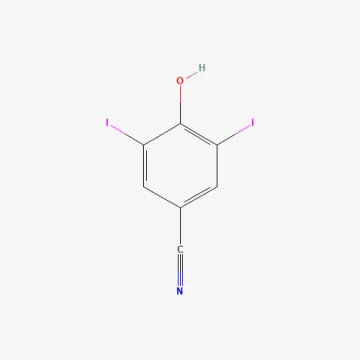
Description
Mode of action
Ioxynil belongs to the nitrile chemical class and functions as a selective contact herbicide. Its primary mechanism involves the inhibition of photosynthesis in susceptible plants, leading to a complete disruption of metabolic processes.
As a contact agent, it exhibits very limited systemic mobility within the plant, meaning its herbicidal effect is localized to the tissues directly exposed to the spray. This necessitates thorough and uniform spray coverage of the foliage for maximum efficacy.
The active ingredient rapidly penetrates the plant cuticle and blocks the Hill reaction. This cessation of photosynthesis prevents the plant from generating the energy required for growth, leading to rapid chlorosis and subsequent tissue necrosis.
Under favorable environmental conditions, treated weeds show signs of wilting within hours, with complete death typically occurring within one to two weeks. Ioxynil is known for its rapid degradation in the soil, leaving no residues that could affect subsequent crops in a rotation.
Because of its specific mode of action, ioxynil is frequently tank-mixed with other herbicides, particularly phenoxy-based compounds, to broaden the spectrum of weeds controlled and to manage herbicide resistance.
What it targets
Ioxynil is primarily used to control a broad spectrum of annual broad-leaved weeds that compete with cereals and other agricultural crops for resources like water, nutrients, and sunlight.
- Common lambsquarters (Chenopodium album)
- Knotweed species (Polygonum spp.)
- Shepherd's purse (Capsella bursa-pastoris)
- Hemp-nettle species (Galeopsis spp.)
- Common chickweed (Stellaria media)
The herbicide is most effective when applied to weeds at their early growth stages, specifically the cotyledon to two-leaf stage. Older, more mature weeds become significantly more tolerant to the contact treatment.
Ioxynil is particularly valuable for controlling weed biotypes that have evolved resistance to sulfonylurea herbicides. Its distinct mode of action makes it a key tool in integrated resistance management strategies.
By effectively suppressing these competitive species early in the season, the use of ioxynil helps ensure that the crop has the optimal environment to achieve its yield potential.
Rates and timing
Application rates for ioxynil vary depending on the target weed growth stage, crop development, and local agronomic practices. Application should be timed when both weeds and crops are in their most susceptible states.
For cereal crops, it is recommended to apply during the tillering phase. It is critical to avoid application if the crop is under stress due to adverse weather conditions like drought, heat, or frost, as this may increase the risk of crop phytotoxicity.
The dosage of the active ingredient must align with the specific product label requirements. A high-quality application with adequate spray volume is essential to ensure that the contact herbicide covers the leaf surface effectively.
For optimal results, spray when temperatures are between 12°C and 22°C. Avoid application during high-wind conditions to prevent spray drift, which could damage nearby sensitive vegetation or crops.
The typical spray volume ranges from 200 to 300 liters per hectare. Users must ensure that sprayers are properly calibrated to deliver the precise concentration required for effective weed control.
Restrictions
Ioxynil is toxic and requires strict adherence to safety protocols during handling and application. Personal protective equipment, including gloves, goggles, and respiratory protection, must be used to minimize human exposure.
The substance poses a significant risk to aquatic life; therefore, it is vital to prevent any spray drift or runoff from entering streams, rivers, or lakes. Do not apply near sensitive aquatic environments or buffer zones.
Equipment must be thoroughly cleaned with appropriate detergents after use to prevent cross-contamination. Empty containers must be triple-rinsed and disposed of in accordance with regional environmental and waste management regulations.
Store the product in a cool, dry, and secure location inaccessible to unauthorized personnel, children, or animals. Keep containers tightly sealed and away from food, drink, or livestock feed supplies.
In the event of accidental exposure or ingestion, seek immediate medical attention. Keep the product label or safety data sheet available to provide emergency responders with information about the active ingredient.
Regulatory
Status in the European Union
Not approved in the EU
- CAS number
- 1689-83-4
- Category (EU)
- HB - Herbicide
- ADI
- 0.005 mg/kg bw/day
- ARfD
- 0.04 mg/kg bw
- AOEL
- 0.01 mg/kg bw/day
Hazard classification (CLP)
Acute Tox. 3 - H301Acute Tox. 3 - H331Acute Tox. 4 - H312Aquatic Acute 1 - H400Aquatic Chronic 1 - H410Eye Irrit. 2 - H319Repr. 2 - H361dSTOT RE 2 - H373
EU legislation
EU status is for reference only and does not replace national registration in your country.
Content graph
Connections · Ioxynil
Most often together:
Marketplace