

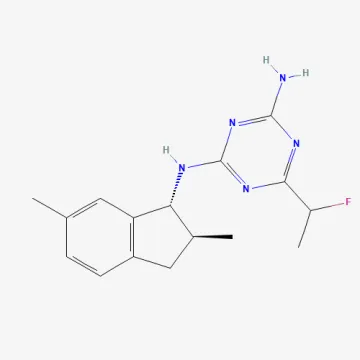
Description
Mode of action
Indaziflam belongs to the alkylazine chemical class and functions as a modern, high-efficacy herbicide that disrupts plant development at very early stages.
The primary mode of action is the inhibition of cellulose biosynthesis. By preventing the formation of essential cell walls, the compound renders the division of cells in growing weed tissues impossible.
Due to its high selectivity and strong binding affinity with soil particles, the substance establishes a defensive layer that blocks seed germination in the topsoil profile.
The product is characterized by extremely low application rates, offering an environmentally sustainable profile compared to many traditional soil-applied herbicides.
The active ingredient provides a significantly prolonged residual effect, ensuring weed management throughout most of the growing season with a single application.
What it targets
Indaziflam is designed to target a broad spectrum of annual broadleaf and grass weed species.
It is highly effective at suppressing weeds emerging from seeds in the topsoil layer before they reach the surface and compete with crops.
It is primarily utilized in perennial crop systems, including orchards, vineyards, and nut plantations, where long-term soil cleanliness is required.
The list of susceptible weeds includes many difficult-to-control species that may exhibit resistance to other herbicide classes.
The compound demonstrates exceptional control efficacy against species like ragweed, amaranth, lambsquarters, and various poaceous weeds.
Rates and timing
Applying this product requires strict adherence to label dosage rates, as exceeding recommended amounts may lead to phytotoxicity in sensitive crop tissues.
Applications are typically conducted in early spring before the onset of active weed growth and before the germination of target seeds.
The efficacy is dependent on soil moisture; rainfall or irrigation is required to activate the compound and move it into the critical root-zone layer.
The soil surface should be leveled and free of significant plant debris to ensure the uniform distribution and performance of the active ingredient.
Pre-harvest intervals are strictly regulated for specific formulations to ensure safety and compliance with agricultural residue standards.
Restrictions
Indaziflam should not be applied to coarse, sandy soils with high organic matter content due to the risk of leaching into deeper soil profiles.
Application is prohibited on sites prone to high erosion or where heavy rainfall is forecasted immediately after treatment.
Because it lacks strong contact activity against established, mature weeds, it cannot serve as a complete substitute for post-emergence herbicides in heavily infested areas.
Operators must prevent spray drift onto green tissues or bark of young trees and shrubs to avoid potential crop injury or systemic damage.
Continuous use of this active ingredient alone on the same site should be avoided to prevent the development of weed resistance and shifting population dynamics.
Regulatory
Status in the European Union
Not approved in the EU
- CAS number
- 950782-86-2
- Category (EU)
- HB - Herbicide
EU status is for reference only and does not replace national registration in your country.
Content graph
Connections · Indaziflam
Most often together:
Marketplace