

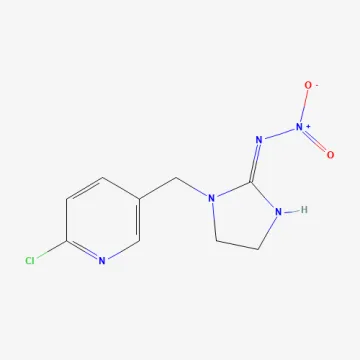
Description
Mode of action
Imidacloprid is a systemic insecticide belonging to the neonicotinoid class, widely used in agriculture for its potent action against various insects.
It acts by interfering with the transmission of impulses in the nervous system of insects, specifically by binding to nicotinic acetylcholine receptors.
The substance is absorbed by plant roots, stems, and leaves, transporting throughout the plant tissues to provide long-lasting systemic protection.
Upon ingestion or contact, the insect experiences rapid paralysis and subsequent death, significantly reducing the damage caused to the host plants.
Its high solubility and systemic mobility make it an excellent choice for seed treatments as well as foliar applications in diverse cropping systems.
What it targets
Imidacloprid effectively controls a wide range of sucking and chewing insects that threaten crop yields and quality in modern farming operations.
- Aphids and whiteflies
- Thrips and leafhoppers
- Colorado potato beetle
- Soil-dwelling larvae (wireworms)
- Various grain beetles and borers
Rates and timing
Application rates depend on the target crop and the method of delivery, with seed treatment rates typically ranging from 0.5 to 10 liters per ton of seeds.
For foliar applications on standing crops, the dosage is usually between 0.1 and 0.3 liters per hectare, depending on the pest pressure observed in the field.
The timing of the application should coincide with the early stages of pest development to maximize the protective effect during the vulnerable crop growth phases.
It is crucial to maintain adequate spray volume to ensure thorough coverage of the target foliage while minimizing the environmental footprint.
Always verify the specific regulatory recommendations for each crop to determine the pre-harvest interval required before safe consumption of the produce.
Restrictions
Imidacloprid is highly toxic to honey bees, and its application must be avoided during the blooming period to protect essential pollinators.
Compliance with mandatory buffer zones and advance notification of nearby beekeepers is required in many jurisdictions to prevent accidental exposure.
Care must be taken to prevent surface runoff into water bodies, as the substance can be harmful to aquatic invertebrates and fish habitats.
Personal protective equipment, including respirators and impervious gloves, is essential for handlers preparing and applying the concentrated product.
To mitigate the risk of resistance development, growers should incorporate integrated pest management (IPM) practices and rotate chemical modes of action.
Regulatory
Status in the European Union
Not approved in the EU
- CAS number
- 138261-41-3
- Category (EU)
- IN - Insecticide
- Approved from
- 01.08.2009
- Approval until
- 01.12.2020
- ADI
- 0.06 mg/kg bw/day
- ARfD
- 0.08 mg/kg bw
- AOEL
- 0.08 mg/kg bw/day
Hazard classification (CLP)
Acute Tox. 4 - H302Aquatic Acute 1 - H400Aquatic Chronic 1 - H410
EU legislation
EU status is for reference only and does not replace national registration in your country.
Content graph
Connections · Imidacloprid
Most often together:
Marketplace
Products · 349

Goifon
Три Дельта Компані Інтернешнл, Гонконг, Китай.
Insecticides
0
0
·
39
1 offer
0.88 €per 1 l
Buy


TABU KS (IMIDACLOPRID, 500 g/l)
ЗАТ Фірма Август, Росія.,селище Вурнари,
Insecticides
0
0
·
36
1 offer
25.16 €per 1 l
Buy

Antikolorad Maks
ТОВ «Фабрика агрохімікатів», Черкаси, Україна
Insecticides
0
0
·
34
23 offers
11.67 €per 1 l
Buy


Zhukomor Water-Soluble Granules
Jiang'an Agrin Company Ltd.
Insecticides
0
0
·
33
1 offer
36 €per 1 l
Buy

Death to Beetles (Vital)
«Нанджин Ессенс Файн-Кемікал Ко. Лтд» (Китай)
Insecticides
0
0
·
33
1 offer
0.91 €per pack
Buy

Bombardir Akva
Hangzhou Ruijiang Chemical Co., Ltd.
Insecticides
0
0
·
32
3 offers
6.53 €per 1 l
Buy


Rembek
Scientific-Production Company "Kvadrat", LLC
Insecticides
0
0
·
29
57 offers
0.74 €per 1 l
Buy


Imidor VRC, v.r.k., (imidacloprid, 200 g/l)
ЗАТ Щелково Агрохім , Росія.
Insecticides
0
0
·
67
No offers
—
Details


Tabu v.s.k., (Imidacloprid, 500 g/l)
ЗАТ Фірма Август, Росія.,селище Вурнари,
Insecticides
0
0
·
57
No offers
—
Details

Nuprid 200 g/l
Нуфарм Австралія Лтд. , Австралія (місце виробництва: Чілі
Insecticides
0
0
·
56
No offers
—
Details
SYNCHRON SL
Nanjing No.1 Pesticide Factory of Red Sun Group Co., Ltd.
Plant Growth Regulator
0
0
·
55
No offers
—
Details


Commander-Pro
F. YUNISITY ENTERPRISES LTD., United Kingdom
Insecticides
0
0
·
52
No offers
—
Details


