

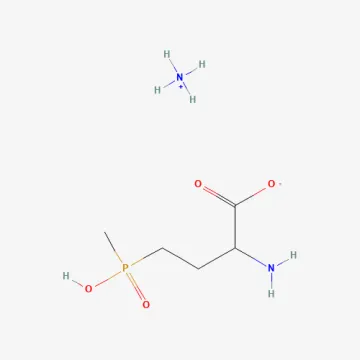
Active ingredient
Especially harmful
Glufosinate-ammonium
Description
Mode of action
Glufosinate-ammonium is a broad-spectrum, non-selective contact herbicide belonging to the phosphinic acid chemical class.
It acts by inhibiting the glutamine synthetase enzyme, which is essential for the detoxification of ammonia in plant tissues.
This inhibition leads to a rapid build-up of ammonia, causing cell membrane destruction, chlorosis, and subsequent necrosis of treated plant parts.
Because it acts primarily through contact, the herbicide exhibits limited systemic movement, focusing its impact on the foliage directly reached by the spray.
The death of weeds occurs relatively quickly, often showing visible symptoms of wilting within a few days under favorable weather conditions.
What it targets
The substance is widely used to control a broad spectrum of annual and perennial grasses, as well as difficult-to-manage broadleaf weeds.
It is effective against significant agricultural threats such as ragweed, pigweed, thistles, and bindweed species that compete for resources.
In addition to weed control, it serves as a powerful desiccant for crops like soybeans, sunflowers, canola, and potatoes before harvest.
Glufosinate-ammonium is frequently employed in orchards and vineyards for weed management in row middles and tree bases.
It is also commonly used for vegetation management on non-cropland areas, including utility lines, roadsides, and industrial sites.
Rates and timing
Application rates are determined by the target weed spectrum, the growth stage of the plants, and the environmental conditions during application.
Effective control requires thorough coverage of the target weeds, ensuring that the droplets reach all green parts of the plant surface.
It performs best in warm conditions with high humidity, as these factors promote rapid weed growth and absorption of the active ingredient.
For desiccation purposes, applications are timed to coincide with the physiological maturity of the crop to ensure optimal drying of seeds and vegetation.
It is recommended to use appropriate spray pressure and nozzle types to prevent drift and achieve consistent droplet distribution across the field.
Restrictions
Glufosinate-ammonium requires careful handling, as it poses risks to human and animal health if ingested or if skin contact occurs during mixing.
Precise application is mandatory to avoid drift onto neighboring crops, as the contact nature of the chemical can cause severe injury to non-target plants.
Applications should be avoided if rain is forecasted shortly after, as washing off the spray solution reduces efficacy and necessitates re-treatment.
Operators must wear personal protective equipment, including gloves, eye protection, and respiratory gear, to ensure safety throughout the handling process.
Store the chemical strictly in its original, labeled container away from food, animal feed, and areas accessible to children or pets.
Regulatory
Status in the European Union
Not approved in the EU
- CAS number
- 77182-82-2
- Category (EU)
- HB - Herbicide
- Approved from
- 01.10.2007
- Approval until
- 31.07.2018
- ADI
- 0.021 mg/kg bw/day
- ARfD
- 0.021 mg/kg bw
- AOEL
- 0.0021 mg/kg bw/day
Hazard classification (CLP)
Acute Tox. 4 - H302Acute Tox. 4 - H312Acute Tox. 4 - H332Repr. 1B - H360FDSTOT RE 2 - H373
EU legislation
EU status is for reference only and does not replace national registration in your country.
Content graph
Connections · Glufosinate-ammonium
Most often together:
Marketplace