

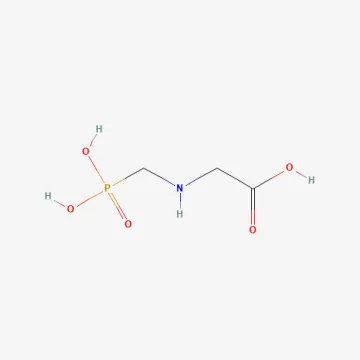
Active ingredient
Especially harmful
Glyphosate-trimesium
Description
Mode of action
Glyphosate-trimesium is a salt of glyphosate classified within the phosphonic acid chemical group. As a non-selective systemic herbicide, it is highly effective at translocating from the treated leaf surfaces through the phloem to the roots, rhizomes, and underground storage organs of weeds.
The mode of action is specifically targeting the shikimate pathway by inhibiting the enzyme 5-enolpyruvylshikimate-3-phosphate synthase (EPSP synthase). This inhibition halts the production of essential aromatic amino acids, including phenylalanine, tyrosine, and tryptophan, leading to the starvation and eventual death of the plant.
The trimesium salt form offers superior absorption kinetics compared to other formulations. It allows for faster penetration through the plant's waxy cuticle, which significantly improves efficacy in sub-optimal environmental conditions, such as lower temperatures or varying humidity levels.
Visible symptoms, including yellowing and chlorosis, typically appear within several days post-application. Full plant mortality occurs gradually, as the chemical moves through the plant's vascular system, eventually resulting in complete necrosis within two to three weeks.
Once it reaches the soil, the molecule binds tightly to soil particles and is degraded by microbial activity. Consequently, it possesses no residual soil activity, which enables farmers to perform subsequent planting shortly after the required safety intervals.
What it targets
Glyphosate-trimesium provides comprehensive control of a wide range of annual and perennial grasses, as well as broad-leaved weeds. Its systemic nature makes it particularly suitable for managing aggressive and deep-rooted species that are often resistant to mechanical weeding methods.
It is widely utilized in industrial weed management, including railway embankments, road verges, and other non-crop areas. In agriculture, it serves as a key tool for field preparation, clearing weeds before sowing, and pre-harvest desiccation to ensure uniform ripening.
Key target weeds include couch grass, creeping thistle, field bindweed, and various opportunistic invasive species. Its ability to eliminate the root system ensures long-term management of fields infested with persistent perennials.
- Couch grass (Elymus repens)
- Field bindweed (Convolvulus arvensis)
- Creeping thistle (Cirsium arvense)
- Various annual grasses and broad-leaved weeds
Since the product is non-selective, it must be applied with precision in agricultural settings. Any contact with desirable crops will result in plant injury or death, necessitating the use of shielded sprayers or pre-emergence application timing.
Rates and timing
Application rates for glyphosate-trimesium vary based on the specific weed spectrum and the growth stage of the plants. Higher dosages are required for the control of robust perennial weeds during their active vegetative growth phase to ensure sufficient translocation to the root system.
The timing of the application is crucial; the target weeds should be in an actively growing stage, typically at the 4-6 leaf stage for grasses or the rosette stage for broad-leaved perennials. Avoid applications during periods of drought or extreme heat when plant metabolism is slowed.
Water quality, particularly hardness and mineral content, can impact the efficacy of the herbicide. The addition of ammonium sulfate or specific water conditioners is often recommended to mitigate the negative effects of hard water on the glyphosate molecule's activity.
Standard application volumes range from 100 to 300 liters of water per hectare for ground equipment. For aerial or low-volume applications, volumes can be reduced to 25-50 liters, provided that complete and uniform coverage of the foliage is achieved through advanced spray technology.
To ensure optimal absorption, do not spray if rainfall is forecasted within 4 to 6 hours. During this period, the plant tissue must remain dry to allow the active ingredient to move effectively into the vascular system without being washed off the leaves.
Restrictions
The most critical limitation is the prevention of spray drift. Because glyphosate-trimesium is a broad-spectrum herbicide, drift onto neighboring crops, ornamental plants, or non-target vegetation will cause significant damage, requiring strict adherence to wind speed and nozzle selection guidelines.
Mechanical soil disturbances, such as plowing or cultivating, should be deferred for at least 5 to 7 days after application. This waiting period is essential to allow the active ingredient enough time to travel down into the root system and achieve complete control of the weed's underground structures.
Operators must wear appropriate Personal Protective Equipment (PPE), including chemical-resistant gloves, eye protection, and long-sleeved clothing. After use, all spraying equipment must be thoroughly cleaned with appropriate neutralizing agents to prevent future crop contamination.
Do not graze livestock on treated areas for at least 7 to 10 days post-application. While the product has low mammalian toxicity, this window ensures that weeds have fully wilted and the chemical has sufficiently degraded, reducing any potential risk of ingestion by grazing animals.
Store the herbicide in its original, sealed container in a cool, dry, and well-ventilated area. Avoid storing in unlined metal tanks as the acidic nature of the formulation may cause corrosion, potentially damaging the equipment and weakening the efficacy of the product over time.
Regulatory
Status in the European Union
Approved in the EU
- CAS number
- 1071-83-6
- Category (EU)
- HB - Herbicide
- Approved from
- 16.12.2023
- Approval until
- 15.12.2033
- ADI
- 0.5 mg/kg bw/day
- ARfD
- 1.5 mg/kg bw
- AOEL
- 0.1 mg/kg bw/day
Hazard classification (CLP)
Aquatic Chronic 2 - H411Eye Dam. 1 - H318
EU status is for reference only and does not replace national registration in your country.
Content graph
Connections · Glyphosate-trimesium
Most often together:
Marketplace
