
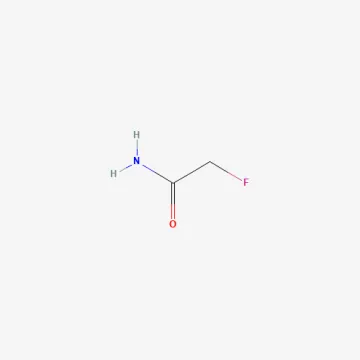
Fluoroacetamide
Description
Mode of action
Fluoroacetamide belongs to a group of organofluorine compounds that exhibit high biological activity against various types of pests. Inside the target organism, the substance undergoes metabolic activation, converting into critical toxic metabolites.
The primary mode of action involves blocking the Krebs cycle. The fluoroacetate formed during metabolic processes inhibits the aconitase enzyme, leading to the cessation of cellular respiration and the termination of ATP synthesis.
Due to energy metabolism disruption, tissues with high metabolic rates, especially the central nervous system and cardiac muscle, are rapidly affected. This causes paralysis and subsequent death of the organism within a short time frame.
The substance is characterized by high stability in the environment, making it extremely effective yet dangerous for non-target organisms. It exhibits a pronounced cumulative effect upon repeated exposure.
Modern usage of this compound is severely restricted or completely banned in many countries due to high toxicity to warm-blooded animals and humans.
What it targets
Historically, fluoroacetamide was primarily used as a powerful rodenticide to control synanthropic and field rodents.
In some agricultural practices, it was utilized to combat insect pests that had developed resistance to organophosphorus pesticides.
The spectrum of action includes a wide range of rodents, in particular rats, mice, and voles, which cause significant damage to stored grain stocks.
Applications against wood-boring pests or insects in greenhouses were also documented in mid-20th-century agricultural literature.
- Brown and black rats
- House mice
- Field rodents
- Stored product pests
Restrictions
The use of fluoroacetamide requires extreme safety measures, as the substance lacks a specific antidote for severe poisoning cases.
Application near water bodies, residential buildings, and livestock grazing areas is prohibited due to the high risk of secondary poisoning of predators and domestic animals.
Handling of the substance is permitted only by specially trained personnel using self-contained respiratory and skin protection equipment.
Disposal of chemical residues and containers must be carried out exclusively through high-temperature incineration in specialized facilities.
The use of this substance as a pesticide in modern agriculture is banned in most agroecosystems for environmental and sanitary reasons.
Status in the European Union
Not approved in the EU
- CAS number
- 640-19-7
- Category (EU)
- RO - Rodenticide
EU status is for reference only and does not replace national registration in your country.