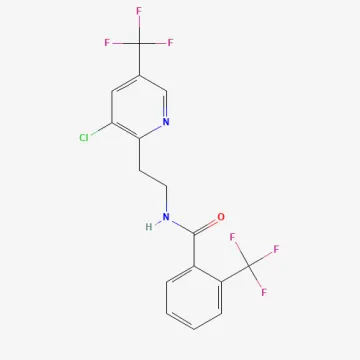
Description
Mode of action
Fluopyram belongs to the pyridinyl-ethyl-benzamide chemical class and acts as a Succinate Dehydrogenase Inhibitor (SDHI, FRAC Group 7), disrupting the mitochondrial respiration of fungi and nematodes.
The substance exhibits high systemic activity, allowing it to move acropetally through plant vascular tissues, which protects both existing leaves and new growth.
It is uniquely positioned in crop protection because it functions both as a potent fungicide and a highly effective nematicide, paralyzing the nervous systems of nematode pests.
Fluopyram is known for its stability and resistance to wash-off by rain, which ensures long-lasting residual protection for various vegetable and fruit crops.
The mode of action targets pathogens at different stages, including spore germination and mycelial growth, making it a versatile tool for integrated pest management.
What it targets
Fluopyram is used to manage a wide range of diseases, including powdery mildew, Botrytis (gray mold), Alternaria, Sclerotinia, and various leaf spot diseases.
As a nematicide, it is specifically effective against root-knot nematodes and other soil-borne nematode species that cause severe yield losses in potatoes and vegetables.
Primary target crops include grapes, apples, strawberries, tomatoes, cucumbers, and a variety of field-grown and greenhouse vegetables.
By preventing latent infections during the growing season, Fluopyram significantly improves the post-harvest quality and storage shelf-life of fruits and vegetables.
It is highly effective against sensitive strains and is frequently utilized in programs to manage pathogens that have developed resistance to other chemical classes.
Rates and timing
Application rates generally range from 0.2 to 1.0 liters per hectare, depending on the crop type, disease pressure, and the method of application, such as foliar spray or drip irrigation.
The number of applications per season is limited to ensure resistance management and compliance with maximum residue limits (MRLs) for food safety.
When applied via drip irrigation (fertigation), it is essential to ensure proper water volume to distribute the active ingredient uniformly in the rhizosphere.
It is recommended to integrate Fluopyram into a rotation program with fungicides from different chemical groups to maintain efficacy over the long term.
Always verify the specific label requirements for each crop and target pest to determine the optimal timing for the first application.
Restrictions
Adherence to pre-harvest intervals (PHI) is critical, as the active ingredient remains persistent in plant tissues to provide ongoing disease control.
Standard personal protective equipment (PPE) must be worn during handling and application to prevent dermal or respiratory exposure.
Care must be taken to prevent drift into water sources, as the compound can be harmful to aquatic life and sensitive ecosystems.
While generally safe for many non-target insects, avoid application during peak bee activity if there is a risk of drift onto flowering plants.
Store the product in its original, sealed container in a cool, dry place, away from sunlight, heat, and direct access by unauthorized personnel.
Regulatory
Status in the European Union
Approved in the EU
- CAS number
- 658066-35-4
- Category (EU)
- FU - Fungicide
- Approved from
- 01.02.2014
- Approval until
- 15.06.2028
- ADI
- 0.012 mg/kg bw/day
- ARfD
- 0.5 mg/kg bw
- AOEL
- 0.05 mg/kg bw/day
Hazard classification (CLP)
Aquatic Chronic 2 - H411
EU legislation
EU status is for reference only and does not replace national registration in your country.
Content graph
Connections · Fluopyram
Most often together:
Marketplace