

Description
Mode of action
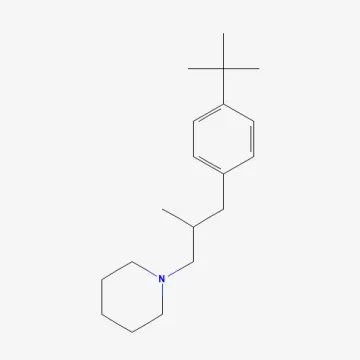
Fenpropidin belongs to the morpholine chemical class and functions as a systemic fungicide with both preventative and curative properties.
Its primary mechanism of action involves the inhibition of ergosterol biosynthesis, which disrupts the formation of fungal cell membranes and leads to the death of the pathogen.
Due to its high lipophilicity, the substance is rapidly absorbed by plant tissues, offering translaminar activity that allows it to control internal infections.
The compound provides a strong stop-effect, making it an excellent choice for halting the progression of fungal diseases during the early stages of development.
Fenpropidin is frequently utilized in tank mixtures to improve the efficacy of triazole fungicides and to implement effective anti-resistance management strategies.
What it targets
The primary target of fenpropidin is powdery mildew, particularly on wheat and barley, where it provides high levels of efficacy.
It is also effective against various species of rust and provides suppression of certain leaf spot diseases, including net blotch.
The chemical inhibits mycelial growth and spore formation, which prevents the rapid spread of diseases across the field.
By protecting the flag leaf during the vegetative and reproductive stages, it helps maintain plant health and supports consistent yield performance.
It remains a core component in many cereal disease control programs due to its consistent results against key pathogens.
Rates and timing
Standard application rates for fenpropidin typically range from 0.5 to 0.75 liters of active ingredient per hectare, depending on infection pressure.
Optimal timing for application is during the stem elongation phase and up to the heading stage to protect critical foliage.
When used in combination with other products, users must ensure compatibility to avoid phytotoxicity and ensure uniform application across the crop canopy.
It is advisable to limit applications to one or two per season to maintain product efficacy and prevent the development of resistant fungal strains.
- Water volume for application: 200–300 liters per hectare.
- Effective temperature range: 12 to 25 degrees Celsius.
- Pre-harvest interval: follow local regulations, typically 30–40 days.
Restrictions
Operators must wear appropriate personal protective equipment, such as gloves and respirators, to prevent dermal and respiratory exposure during mixing and application.
Fenpropidin can be toxic to aquatic life; therefore, it is imperative to maintain buffer zones near water bodies and avoid drift.
Avoid applying the fungicide during high wind conditions to prevent chemical drift onto non-target areas or sensitive neighboring crops.
Strictly adhere to restricted entry intervals (REI) after treatment to ensure that workers are not exposed to residue levels before it is safe.
Store the product in a cool, dry place in its original packaging, keeping it away from food, feed, and unauthorized access by children or animals.
Regulatory
Status in the European Union
Approved in the EU
- CAS number
- 67306-00-7
- Category (EU)
- FU - Fungicide
- Approved from
- 01.01.2009
- Approval until
- 15.05.2027
- ADI
- 0.02 mg/kg bw/day
- ARfD
- 0.02 mg/kg bw
- AOEL
- 0.02 mg/kg bw/day
EU legislation
EU status is for reference only and does not replace national registration in your country.
Content graph
Connections · Fenpropidin
Most often together:
Marketplace
Products · 9


