

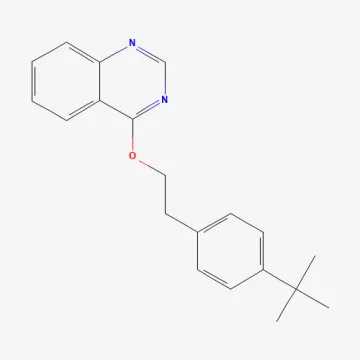
Description
Mode of action
Fenazaquin belongs to the quinazoline chemical class and acts as a highly effective contact and stomach insecticide-acaricide. The substance targets the respiratory system of pests by inhibiting electron transport in the mitochondria.
The mechanism of action involves the inhibition of Complex I (NADH-ubiquinone oxidoreductase) in the electron transport chain, which leads to rapid paralysis and subsequent death of the insect or mite due to cellular energy deprivation.
A key feature of this active ingredient is its high initial toxicity, which provides a fast knockdown effect immediately after application on plant surfaces.
Fenazaquin exhibits significant translaminar action, allowing it to penetrate leaf tissues and provide effective control of pests even on the underside of leaves.
The product provides a long residual effect, which helps to keep pest populations suppressed for several weeks following the application.
What it targets
The primary use of fenazaquin is for the control of phytophagous mites from various families, including spider mites, fruit mites, and gall mites.
The substance is effective against all developmental stages of pests: eggs, larvae, nymphs, and adults (imago), making it indispensable in integrated pest management programs.
It is applied to a wide range of fruit and berry crops, including apples, grapes, citrus fruits, and stone fruits.
In addition to mites, fenazaquin has side effects on several other pests such as thrips, whiteflies, and certain species of leafhoppers that damage vegetable crops.
The product demonstrates high biological activity even in hot climates, when mite activity reaches its peak.
Rates and timing
The timing of fenazaquin application is scheduled during the growing season, when pest populations begin to exceed the economic damage threshold.
The application rates of the working solution depend on the crop type, planting density, and the degree of infestation on the site.
Typically, treatments are carried out preventively or upon the appearance of the first signs of mite colonies to prevent their mass multiplication.
It is crucial to ensure uniform wetting of the entire leaf surface, as contact with the substance is a key factor in its overall effectiveness.
The pre-harvest interval averages between 20 and 30 days, which requires careful planning of treatment schedules in intensive horticultural practices.
Restrictions
Fenazaquin is a moderately hazardous substance to warm-blooded animals, so handling it requires the use of personal protective equipment for skin and respiratory protection.
The product is highly toxic to bees, therefore its application is strictly prohibited during the active flowering period of crops.
To prevent the development of resistance, it is recommended to alternate the use of fenazaquin with acaricides from other chemical groups with different modes of action.
The discharge of residual working solution and wash water near fisheries, water bodies, and drinking water sources is strictly prohibited.
The product must be stored in its original packaging in a cool, ventilated, and dry place, away from direct sunlight.
Regulatory
Status in the European Union
Approved in the EU
- CAS number
- 120928-09-8
- Category (EU)
- AC - Acaricide
- Approved from
- 01.06.2011
- Approval until
- 31.08.2026
- ADI
- 0.005 mg/kg bw/day
- ARfD
- 0.1 mg/kg bw
- AOEL
- 0.01 mg/kg bw/day
Hazard classification (CLP)
Acute Tox. 3 - H301Acute Tox. 4 - H332Aquatic Acute 1 - H400Aquatic Chronic 1 - H410
EU legislation
EU status is for reference only and does not replace national registration in your country.
Content graph
Connections · Fenazaquin
Most often together:
Marketplace