
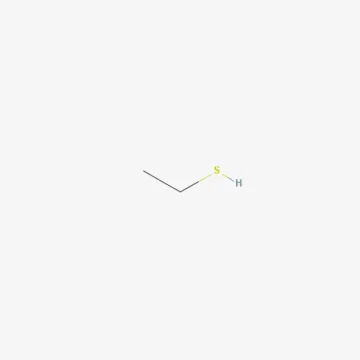
Ethanethiol
Description
Mode of action
Ethanethiol, also known as ethyl mercaptan, is a sulfur-containing organic compound belonging to the thiol class, widely recognized in agriculture for its fumigant properties.
The mode of action involves the rapid diffusion of the substance in gaseous form, which allows it to reach pests hiding in difficult-to-access areas of stored products.
Upon exposure, the compound interferes with the respiratory and enzymatic processes of pests, leading to rapid paralysis and subsequent mortality.
Its high volatility ensures efficient coverage of closed volumes, making it an essential tool for disinfecting storage facilities, silos, and transit containers.
The substance's characteristic pungent odor also serves as a critical safety feature, allowing operators to detect leaks or pesticide presence in the working environment.
What it targets
The primary use of this group of substances is the eradication of stored-grain pests, including various beetles, weevils, and mites that compromise crop quality.
Ethanethiol is highly effective against wood-boring insects, helping to protect the integrity of wooden agricultural structures and storage pallets.
It is frequently employed in the empty warehouse sanitation process to prevent cross-contamination and infestations in bulk agricultural shipments.
Furthermore, it has shown efficacy against soil-dwelling nematodes in specific controlled environments, disrupting their life cycles effectively.
The broad-spectrum action makes it a valuable resource in integrated pest management programs targeting resilient insect populations.
Rates and timing
Application rates are determined by the cubic volume of the area treated and the structural integrity (tightness) of the storage facility.
The typical exposure period ranges from 24 to 72 hours, depending on the pest species and the specific density of the stored materials within the space.
Precise dosage calculation must account for ambient temperature and relative humidity, as these factors significantly influence the volatility and concentration of the gas.
Specialized equipment for uniform gas distribution is required to maintain the necessary lethal concentration throughout the entire target area.
Post-treatment degassing periods are mandatory and must be strictly monitored to ensure the environment is safe before reentry.
Restrictions
Strict use of personal protective equipment (PPE), including respiratory protection and protective suits, is mandatory due to the high toxicity of the compound.
The application is prohibited in proximity to residential areas or public buildings to prevent accidental exposure of non-target populations.
Ethanethiol is highly flammable and explosive under certain conditions, requiring the removal of all potential ignition sources during the treatment process.
Waste management must strictly adhere to environmental protection laws to prevent soil and water contamination through improper disposal of residues.
Re-entry into treated zones is permitted only after instrumental air quality testing confirms that residue levels are within the established safe limits.
Status in the European Union
Not approved in the EU
- CAS number
- 75-08-1
- Category (EU)
- RO - Rodenticide
EU status is for reference only and does not replace national registration in your country.