
Description
Mode of action
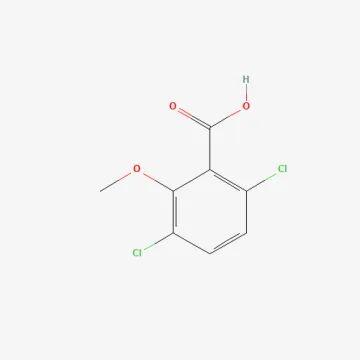
Dicamba belongs to the benzoic acid chemical class and is a systemic herbicide with an auxin-mimicking effect. The active ingredient is absorbed by both leaves and roots, moving rapidly through the phloem and xylem to the plant's growth points.
The mechanism of action is based on disrupting the plant's hormonal balance: dicamba mimics natural auxins, causing uncontrolled cell division and severe tissue deformation.
As a result of accelerated cell growth, weeds lose the ability to perform photosynthesis and metabolic functions, which leads to plant death several weeks after application.
The product effectively suppresses weed growth even under unfavorable weather conditions, maintaining high activity across a wide range of temperatures.
Due to its systemic properties, the compound penetrates even the deepest parts of the plant, ensuring the destruction of the root system of perennials.
What it targets
This active ingredient is primarily used to control a broad spectrum of annual and perennial broadleaf weeds in agricultural crop fields.
Dicamba is particularly effective against stubborn weed species such as thistles (Cirsium spp.), field bindweed, knotweed, sorrel, and other resistant species that are difficult to manage.
The herbicide shows high selectivity, allowing it to be used in cereal crops, corn, sorghum, and on managed pastures.
The substance is indispensable in integrated pest management programs where perennial weeds with deep root systems dominate and are difficult to suppress with other types of herbicides.
- Canada thistle
- Field bindweed
- Lambsquarters
- Amaranthus species
- Wild mustard
Rates and timing
The application rates for dicamba depend directly on the type of crop being protected, the level of weed infestation, and the growth stage of the target weeds.
In corn fields, application should occur at the 3–5 leaf stage; strict adherence to dosage is essential to avoid potential phytotoxicity to the corn plants themselves.
For cereal crops, application is recommended during the tillering stage, when weeds are actively growing, which ensures optimal absorption of the active ingredient.
It is important to ensure that annual weeds are in the 2–4 leaf stage and perennial weeds have sufficient foliage surface area for absorption at the time of spraying.
Utilizing tank mixes with other compatible herbicides can broaden the spectrum of controlled weeds and reduce the total amount of active ingredient applied per hectare.
Restrictions
A primary limitation of dicamba is its high volatility and the extreme sensitivity of many non-target crops to herbicide drift caused by wind.
Spraying must be strictly prohibited near sensitive crops such as sugar beets, sunflowers, vineyards, and fruit orchards to prevent off-target damage.
Adhering to temperature guidelines is critical; excessive heat increases the risk of product evaporation and damage to neighboring fields.
Appropriate personal protective equipment must be worn when handling the herbicide to prevent skin contact and inhalation of spray droplets.
The use of this product is restricted in water protection areas due to the risk of active ingredient leaching and contamination of water bodies.
Regulatory
Status in the European Union
Approved in the EU
- CAS number
- 1918-00-9
- Category (EU)
- HB - Herbicide
- Approved from
- 01.01.2009
- Approval until
- 31.03.2027
- ADI
- 0.3 mg/kg bw/day
- ARfD
- 0.3 mg/kg bw
- AOEL
- 0.3 mg/kg bw/day
Hazard classification (CLP)
Acute Tox. 4 - H302Aquatic Chronic 3 - H412Eye Dam. 1 - H318
EU legislation
EU status is for reference only and does not replace national registration in your country.
Content graph
Connections · Dicamba
Most often together:
Marketplace