

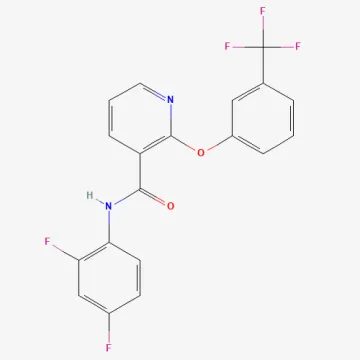
Description
Mode of action
Diflufenican is a selective systemic herbicide belonging to the pyridinecarboxamide chemical class. It is primarily used for pre-emergence and early post-emergence control of weeds.
The mode of action involves the inhibition of the phytoene desaturase enzyme. This enzyme is crucial for the biosynthesis of carotenoids in plant tissues.
By preventing carotenoid formation, the herbicide causes the rapid breakdown of chlorophyll when the plant is exposed to sunlight, leading to bleaching and necrosis.
The substance provides excellent residual activity in the soil, creating a chemical barrier that prevents the emergence of secondary weed flushes.
Symptoms of weed stress, such as whitening of the meristematic tissues, appear shortly after exposure, followed by the complete desiccation of the plant within a few weeks.
What it targets
Diflufenican is highly effective against a broad spectrum of broad-leaved weeds. It is widely used in winter and spring cereal crops to ensure a weed-free start.
Key target species include cleavers (Galium aparine), chickweed (Stellaria media), wild radish, field speedwell, and various species of dead-nettle and poppy.
The herbicide is particularly valued for its ability to control species that are resistant to other herbicide groups, making it essential for resistance management programs.
Due to its high selectivity for wheat and barley, it can be applied early in the crop cycle without compromising yield or plant health.
While primarily targeting broad-leaved weeds, it serves as a backbone in tank mixes, often combined with grass-specific herbicides for complete weed management.
Rates and timing
The application rates for diflufenican generally range from 100 to 250 grams of active ingredient per hectare, depending on soil type and weed pressure.
Optimal timing is at the cotyledon stage of the weeds. Early autumn application is standard practice for winter wheat to provide a clean field through the winter.
Soil conditions play a critical role in efficacy. Adequate soil moisture is required for the plant to uptake the herbicide effectively from the treated soil layer.
For high-organic-matter soils, the application rate may need to be adjusted upwards to maintain consistent weed control results throughout the season.
Careful calibration of spraying equipment is necessary to ensure uniform coverage, which is vital for maintaining the effectiveness of the soil-applied layer.
Restrictions
The primary concern when using diflufenican is its behavior on very sandy or porous soils, where heavy rainfall could potentially move the product into the crop root zone.
It is advised to avoid applying the herbicide to stressed crops, such as those suffering from drought, waterlogging, or cold-related damage, to prevent phytotoxicity.
Crop rotation should be considered, although diflufenican typically has a short persistence and minimal risk to follow-on crops when applied at label rates.
Environmental safety protocols must be followed strictly, including buffer zones near water bodies, as the substance is toxic to aquatic ecosystems.
Operators should always wear appropriate personal protective equipment (PPE) and adhere to local safety regulations regarding the handling and storage of agricultural chemicals.
Regulatory
Status in the European Union
Approved in the EU
- CAS number
- 83164-33-4
- Approved from
- 01.01.2009
- Approval until
- 31.08.2027
- ADI
- 0.2 mg/kg bw/day
- ARfD
- Not appl.
- AOEL
- 0.11 mg/kg bw/day
Hazard classification (CLP)
Aquatic Chronic 3 - H412
EU legislation
EU status is for reference only and does not replace national registration in your country.
Content graph
Connections · Diflufenican
Most often together:
Marketplace
Products · 5


Trinity, CS (diflufenican, 40 g/l + chlorotoluron, 250 g/l + pendimethalin, 300 g/l)
Adam Aghan Ltd., Israel
Herbicides
0
0
·
30
No offers
—
Details