
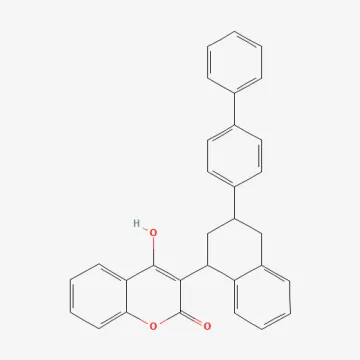
Difenacoum
Description
Mode of action
Difenacoum is a second-generation anticoagulant rodenticide belonging to the hydroxycoumarin group. It is widely used in agricultural and urban pest management due to its high efficacy against rodent populations.
The chemical interferes with the recycling of vitamin K1 in the liver, which is essential for the blood clotting process. By inhibiting this process, the substance causes internal hemorrhaging in rodents.
Because it is a second-generation anticoagulant, rodents can often ingest a lethal dose after a single feeding. This makes it significantly more effective than older compounds that required multiple feedings over several days.
The action is delayed, meaning the rodents do not associate the consumption of the bait with the illness of their peers. This characteristic ensures that the entire colony continues to feed on the bait until the population is eradicated.
Due to its high potency, difenacoum is particularly effective in controlling rodent populations that have developed resistance to first-generation anticoagulants like warfarin.
What it targets
Difenacoum is used to target various species of synanthropic and field rodents, including brown rats, black rats, and various house and field mice.
It is standard for use in protecting grain storage facilities, livestock barns, warehouses, and food processing plants where rodents pose a major economic and sanitary threat.
The substance is effective in environments where rodent infestations are large or where sanitation levels are difficult to maintain, providing a reliable way to reduce pest density.
It is equally applicable in domestic settings, such as farmhouses or outbuildings, to control infestations that could spread zoonotic diseases.
By controlling rodents effectively, the use of difenacoum helps prevent structural damage to property and contamination of food supplies.
Rates and timing
Difenacoum is typically formulated as ready-to-use baits, including wax blocks, pellets, grain-based mixtures, and pastes. These forms are designed to withstand different environmental conditions.
Baits should be placed along walls, near runways, and inside burrow entrances where rodents are most active. Bait stations are used to ensure the bait remains dry and protected from accidental access.
Application rates generally range from 10–20 grams for mice to 50–100 grams for rats per bait station, depending on the severity of the infestation.
Regular monitoring of bait stations is crucial. If the bait is consumed, it should be replenished immediately until activity ceases, indicating that the population has been eliminated.
Strategic placement and consistent replenishment ensure that even shy or cautious rodents within the colony will eventually consume the bait.
Restrictions
Difenacoum is highly toxic to non-target mammals and birds. The primary safety rule is to use tamper-resistant bait stations to prevent domestic pets, livestock, or wildlife from accessing the bait.
Personnel handling the bait must wear appropriate personal protective equipment, such as chemical-resistant gloves, to avoid direct skin contact and inhalation of dust particles.
All bait should be clearly labeled, and access by unauthorized persons or children must be strictly prevented through secure storage and restricted placement.
Dead rodents should be gathered and disposed of according to local environmental regulations—typically by burial or incineration—to prevent secondary poisoning of scavengers.
In case of accidental exposure or poisoning, vitamin K1 is the specific medical antidote. Treatment must be supervised by a healthcare professional or a veterinarian immediately.
Status in the European Union
Not approved in the EU
- CAS number
- 56073-07-5
- Category (EU)
- RO - Rodenticide
- Approved from
- 01.01.2010
- Approval until
- 30.12.2019
- ADI
- Not appl.
- ARfD
- Not appl.
- AOEL
- 0.000017 mg/kg bw/day
EU status is for reference only and does not replace national registration in your country.