

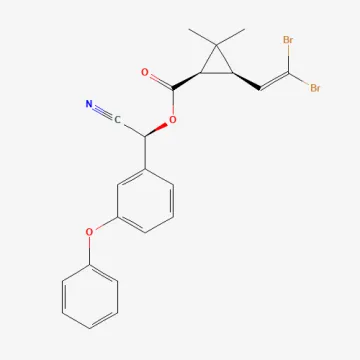
Description
Mode of action
Deltamethrin is a synthetic pyrethroid insecticide known for its powerful contact and stomach action. It works by interfering with the nervous system of insects, leading to rapid knockdown and death.
The mode of action involves disrupting the permeability of cell membranes and blocking sodium channels in nerve cells. This causes nerve overexcitation, paralysis, and the eventual termination of the insect's life cycle.
This active ingredient is characterized by excellent knockdown capabilities, providing immediate results against many agricultural pests. While it lacks significant systemic properties, it remains highly effective when applied uniformly.
Deltamethrin is sensitive to ultraviolet light and high temperatures, which influences the timing and frequency of field applications. In the soil, it is degraded by microbial activity, preventing long-term environmental accumulation.
Formulations of deltamethrin are typically presented as emulsifiable concentrates or oil dispersions, designed to improve adhesion to plant surfaces and increase penetration through the insect's waxy cuticle.
What it targets
Deltamethrin covers a broad spectrum of pests, effectively controlling both chewing and sucking insects. It is particularly active against larvae and adults, making it versatile for integrated pest management.
Common targets include aphids, thrips, beetles (such as the Colorado potato beetle), caterpillars (including various moths), and bugs. It is widely used in cereals, corn, potatoes, sugar beets, and fruit orchards.
In fruit production, it is effective against leafrollers and fruit moths. The compound helps prevent severe yield losses by stopping feeding damage immediately upon application across diverse agricultural crops.
The efficacy of deltamethrin remains stable even at cooler temperatures, making it a reliable solution for early-season pest pressure when other chemical classes might show reduced activity.
To ensure long-term effectiveness, growers are advised to manage potential resistance by alternating deltamethrin with insecticides possessing different modes of action throughout the growing season.
Rates and timing
Application rates for deltamethrin are determined by the specific pest population density and the target crop's developmental stage. Precision in dosage is essential to maximize economic returns.
Growers should monitor pest levels and apply the insecticide once the economic threshold is reached. Thorough coverage of the plant canopy is necessary to ensure the best results due to its contact-based activity.
The pre-harvest interval (PHI) for deltamethrin typically ranges from 20 to 30 days, depending on local regulations and crop type. This ensures that residue levels on the final product remain within legal safety limits.
Proper mixing techniques are crucial for maintaining the stability of the spray solution. Using clean water and ensuring correct pH levels can prevent the degradation of the active ingredient before it hits the target surface.
Avoid applications during peak wind hours to prevent drift, as this reduces the amount of active substance on the target area and can cause damage to neighboring non-target crops or sensitive environments.
Restrictions
Deltamethrin is highly toxic to honeybees and aquatic organisms. It is strictly prohibited to apply this insecticide during the blooming phase of crops when pollinators are active.
Buffer zones are required when spraying near bodies of water to prevent contamination of rivers, lakes, or ponds. All local environmental regulations must be strictly followed during and after application.
Personal Protective Equipment (PPE), including chemical-resistant gloves, respirators, and eye protection, is mandatory when handling and applying this compound to prevent accidental exposure.
Storage facilities for deltamethrin must be secure, cool, dry, and well-ventilated. The product should be kept separate from food, animal feed, and fertilizers to prevent cross-contamination.
Disposal of empty containers and unused spray mixtures must be handled as hazardous waste according to local environmental protection agency guidelines to minimize the risk of soil and water pollution.
Regulatory
Status in the European Union
Approved in the EU
- CAS number
- 52918-63-5
- Approved from
- 01.11.2003
- Approval until
- 15.08.2026
- ADI
- 0.01 mg/kg bw/day
- ARfD
- 0.01 mg/kg bw
- AOEL
- 0.0075 mg/kg bw/day
Hazard classification (CLP)
Acute Tox. 3 - H301Acute Tox. 3 - H331Aquatic Acute 1 - H400Aquatic Chronic 1 - H410
EU legislation
EU status is for reference only and does not replace national registration in your country.
Content graph
Connections · Deltamethrin
Most often together:
Marketplace
Products · 25


Decis f-Lux 25 EC a.e.
Ф. Байєр КропСаєнс АГ, Німеччина
Insecticides
0
0
·
52
1 offer
16.76 €per 1 l
Buy


