
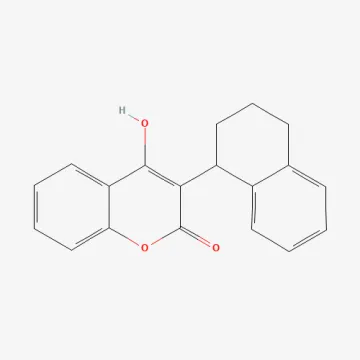
Coumatetralyl
Description
Mode of action
Coumatetralyl belongs to the chemical class of 4-hydroxycoumarin derivatives and acts as a first-generation indirect anticoagulant. The substance inhibits the synthesis of vitamin K1 in the bodies of warm-blooded animals, which is essential for the production of blood clotting factors in the liver.
As a result of the disruption of biochemical processes, the blood clotting ability of pests is drastically reduced. This leads to internal and external hemorrhaging, which eventually causes the animal to die several days after consuming the bait.
The mechanism of action of coumatetralyl is characterized by a delayed effect, which is of major epidemiological importance. Rodents do not associate the death of their peers with the bait, preventing bait shyness and allowing for successful pest control operations.
What it targets
The active substance is used exclusively as a rodenticide to eliminate various types of synanthropic and field rodents. The primary targets include brown rats, black rats, as well as various species of house and field mice.
Products based on coumatetralyl are effectively used in facilities of various purposes, including grain storage facilities, livestock complexes, warehouses, as well as in residential houses and private gardens.
Rates and timing
Application is carried out by preparing poisoned baits based on food ingredients such as grain, cereals, or compound feed. The concentration of the active substance in the final bait usually ranges from 0.03% to 0.05%.
Baits are placed in areas of high rodent activity, near burrows, or along travel paths. It is crucial to ensure a constant supply of bait until consumption ceases entirely, as coumatetralyl requires repeated ingestion to accumulate a lethal dose.
Restrictions
Handling coumatetralyl requires strict adherence to safety measures, as the substance poses risks to humans, pets, and wildlife. When working with the concentrate, it is necessary to use personal protective equipment for the skin and respiratory system.
Baits must not be used in areas accessible to non-target animals or children. In case of accidental poisoning, the antidote is vitamin K1 (phytomenadione), which should be administered under strict medical supervision.
Status in the European Union
Not approved in the EU
- CAS number
- 5836-29-3
- Category (EU)
- RO - Rodenticide
EU status is for reference only and does not replace national registration in your country.