
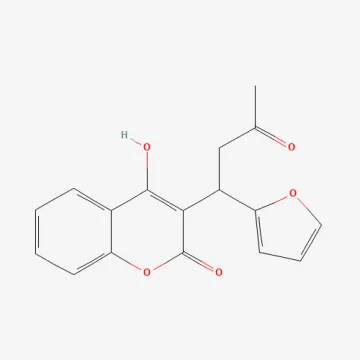
Coumafuryl
Description
Mode of action
Coumafuryl belongs to the first-generation anticoagulant group of rodenticides. This chemical compound is a coumarin derivative, which determines its specific mode of action on pest physiology.
The mechanism of action is based on inhibiting the synthesis of vitamin K in the rodent's body. Without this vitamin, the liver stops producing prothrombin and other blood-clotting factors.
As a result, even minor internal vascular damage leads to extensive hemorrhaging, which eventually becomes fatal for the rodent.
The effect of coumafuryl is not immediate, which provides an evolutionary advantage in population control, as rodents do not develop bait shyness.
The substance accumulates gradually in the organs, requiring multiple ingestions of poisoned bait over several days to achieve a lethal dose.
What it targets
The primary use of coumafuryl is for the control of synanthropic rodents, including brown rats, black rats, and various species of house mice.
The product is applied in warehouses, agricultural facilities, grain storage areas, and food processing plants to reduce pest populations.
Due to its specificity, it effectively targets rodents whose physiology is sensitive to disruptions in blood clotting processes.
Its use in the agricultural sector significantly helps in reducing harvest losses caused by rodent activity in storage facilities.
- Brown rat (Rattus norvegicus)
- Black rat (Rattus rattus)
- House mouse (Mus musculus)
Rates and timing
Preparing baits based on coumafuryl requires strict adherence to the active substance concentration in food carriers such as grain, cereals, or compound feed.
Application rates depend on the degree of infestation: baits should be placed in bait stations or rodent burrows in portions of 10–50 grams.
Monitoring frequency is every 2–3 days; if bait is fully or partially consumed, it must be replenished promptly until pest activity ceases.
The duration of the treatment course typically varies from one to three weeks, depending on the population size and the intensity of feeding.
It is essential to ensure constant access to the bait so that the accumulation of the anticoagulant reaches the critical threshold necessary for the rodent's death.
Restrictions
Coumafuryl poses a risk to non-target organisms, including domestic animals, birds, and humans, requiring strict safety measures.
It is strictly prohibited to place poisoned baits in open areas accessible to livestock, pets, or children.
All work must be conducted using personal protective equipment, including gloves, respirators, and protective clothing, to prevent dermal contact.
Upon completion of the deratization cycle, all remaining bait residues and rodent carcasses must be collected and disposed of via burial or incineration.
The product must be stored exclusively in its original packaging, in a dry, secure location inaccessible to unauthorized persons, away from food and animal feed.
Status in the European Union
Not approved in the EU
- CAS number
- 117-52-2
- Category (EU)
- RO - Rodenticide
EU status is for reference only and does not replace national registration in your country.