

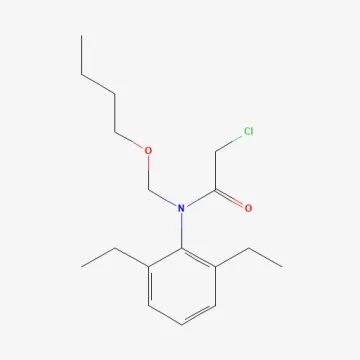
Description
Mode of action
Butachlor is a systemic herbicide belonging to the chloroacetanilide chemical class. Its primary function is to inhibit protein and nucleic acid synthesis in germinating seeds, effectively stopping the development of weed embryos.
The active ingredient is absorbed by weed seeds primarily through the coleoptile and roots during germination. By blocking essential enzymes, butachlor halts the growth of meristematic tissues, which leads to the death of the seedling before it emerges from the soil.
Butachlor exhibits high selectivity for crop plants like rice. These crops possess specific metabolic pathways that allow them to detoxify the herbicide, provided it is applied at recommended rates and depths.
The substance creates a protective layer in the topsoil, which remains active for an extended period. Its efficacy is highly dependent on soil moisture, as water facilitates the uptake of the active ingredient by the weed seedlings.
The systemic movement of the herbicide within the plant tissues ensures that once the substance is absorbed, the entire seedling is affected, preventing any further regrowth or development of the competing weeds.
What it targets
Butachlor is specifically designed for use in rice cultivation. It is highly effective in managing a wide range of annual grasses and some broadleaf weeds that commonly compete with rice crops in paddy fields.
- Barnyard grass (Echinochloa crus-galli)
- Smallflower umbrella sedge (Cyperus difformis)
- Monochoria (Monochoria vaginalis)
- Bulrush (Scirpus spp.)
The herbicide is most effective against weeds that are just beginning to germinate. It has minimal activity against mature, fully established weeds that have already developed extensive root systems, making timing critical.
By controlling weeds at the very start of the season, butachlor allows the rice crop to establish itself without the pressure of nutrient and light competition, which is crucial for achieving high yield potential.
Its reliability and broad spectrum of activity against rice-paddy weeds make it a standard tool in sustainable rice production and weed management strategies globally.
Rates and timing
The application rate for butachlor generally ranges from 1.5 to 3.0 kg of active ingredient per hectare, depending on soil type, weed pressure, and the specific application method being used in the field.
The most common application method involves treating the wet soil or applying the chemical directly to the water in the rice paddy. Even distribution is essential to ensure that a consistent protective herbicide barrier is created.
Timing of application is critical; it should be applied pre-emergence or at the very early post-emergence stage of the rice crop, ensuring that the weeds have not yet passed the sensitive germination phase.
Operators should avoid significant fluctuations in water levels immediately after application. Keeping the water level stable allows the herbicide to remain concentrated in the root zone where it is most effective.
Field monitoring is recommended 10–14 days after treatment to assess weed control performance and determine if any supplementary measures are needed to maintain the field clean until the canopy closes.
Restrictions
Strict safety precautions are required when handling butachlor. Workers must wear appropriate personal protective equipment (PPE), including gloves, goggles, and respiratory protection, to avoid skin contact or inhalation.
The substance is toxic to aquatic organisms. Therefore, discharging water from treated rice paddies into open water bodies or general irrigation channels is prohibited for a certain period following the application.
Users must consider potential soil carry-over when planning crop rotations. The presence of residual butachlor in the soil may negatively impact sensitive crops planted in the following season.
It is not recommended for use on highly porous sandy soils. In such conditions, the active ingredient can leach into deeper soil layers, which reduces the efficacy of the herbicide and increases the risk of groundwater contamination.
Storage must be done in a secure, dry, and cool area away from direct sunlight, food, and animal feed. Always ensure that the product is kept in its original packaging and out of reach of unauthorized personnel.
Regulatory
Status in the European Union
Not approved in the EU
- CAS number
- 23184-66-9
- Category (EU)
- HB - Herbicide
EU legislation
EU status is for reference only and does not replace national registration in your country.
Content graph
Connections · Butachlor
Most often together:
Marketplace