

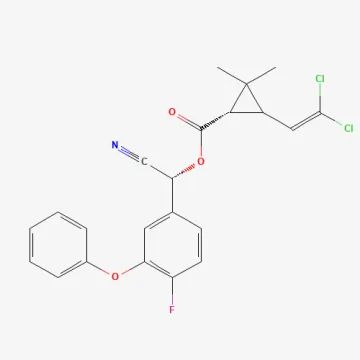
Description
Mode of action
Beta-cyfluthrin is a high-performance synthetic pyrethroid insecticide widely recognized for its strong contact and stomach action against a broad range of insect pests.
The core mechanism of action involves the disruption of the sodium channels in the nerve membranes of insects, leading to continuous depolarization of the nerve cell membranes.
This disruption causes a rapid transmission of abnormal electrical impulses, resulting in tremors, paralysis, and eventually the death of the targeted insect species.
One of its key advantages is the rapid "knock-down" effect, which halts the feeding process of pests almost immediately upon contact or ingestion of the treated plant tissue.
The substance possesses high lipophilicity, ensuring excellent adhesion to the plant surface and resistance to being washed away by rain, which provides a consistent protective layer.
What it targets
Beta-cyfluthrin is effective in controlling a wide array of agricultural pests belonging to several major orders, including Coleoptera, Lepidoptera, and Homoptera.
- Caterpillars and moths such as armyworms
- Beetles, including the Colorado potato beetle
- Aphids, leafhoppers, and plant bugs
- Cereal pests such as grain weevils and wheat bugs
- Various sucking and chewing insects that threaten yield quality
Its application is crucial when pest populations reach an economic threshold where crop damage becomes imminent, requiring prompt and decisive intervention.
This insecticide is suitable for protecting major field crops like corn, wheat, barley, sugar beets, as well as various fruit and vegetable crops in horticulture.
By providing a broad-spectrum control, it helps farmers maintain crop health throughout critical growth stages while preventing secondary pest outbreaks.
Rates and timing
The application rates of beta-cyfluthrin are carefully determined based on the specific pest pressure, the crop variety, and the developmental stage of the plants.
High biological activity allows for the use of relatively low doses per hectare, making it a cost-effective choice for large-scale agricultural operations.
Optimal timing is achieved through regular field monitoring, ensuring that the spray is applied precisely when the pests are most vulnerable to the chemical.
Adequate water volume and uniform coverage are essential during spraying to ensure that the active ingredient reaches all parts of the foliage where pests reside.
Consulting product labels is mandatory to determine the exact concentration required for specific regional environmental conditions and target pest populations.
Restrictions
Safety is a priority, as beta-cyfluthrin is highly toxic to honeybees and other beneficial insects; therefore, application during flowering is strictly prohibited.
Operators must adhere to strict buffer zones near water bodies and residential areas to prevent environmental contamination and protect non-target organisms.
Full personal protective equipment, including respiratory masks, gloves, and protective suits, is required for personnel handling the concentrate or the working solution.
Strict adherence to pre-harvest intervals is necessary to ensure that the residue levels in the final crop remain within safe, legal limits for human consumption.
To mitigate the risk of pest resistance, it is advised to rotate beta-cyfluthrin with insecticides from different chemical classes throughout the growing season.
Regulatory
Status in the European Union
Not approved in the EU
- CAS number
- 1820573-27-0
- Category (EU)
- IN - Insecticide
- Approved from
- 01.01.2004
- Approval until
- 20.07.2020
- ADI
- 0.01 mg/kg bw/day
- ARfD
- 0.01 mg/kg bw
- AOEL
- 0.0002 mg/kg bw/day
Hazard classification (CLP)
Acute Tox. 2 - H300Acute Tox. 2 - H330Aquatic Acute 1 - H400Aquatic Chronic 1 - H410
EU legislation
EU status is for reference only and does not replace national registration in your country.
Content graph
Connections · Beta-cyfluthrin
Most often together:
Marketplace


