

Pest · Coleoptera (beetles) · affects Clary sage, Rose, Fodder beet
Especially harmful
Dock weevil
Apion sp.
Description
How to identify
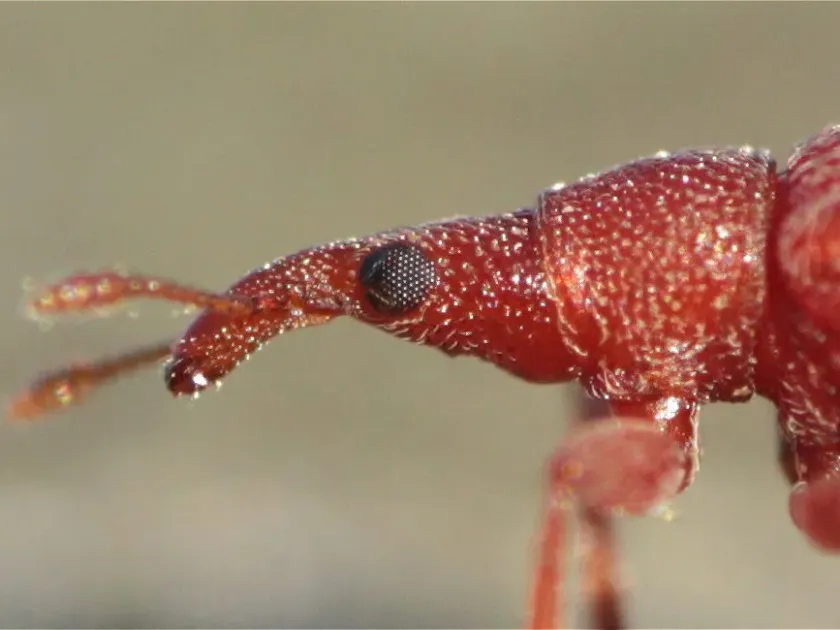
The dock weevil (Apion miniatum, formerly within the genus Apion) is a small beetle belonging to the Apionidae family. The insect is characterized by a distinctive pear-shaped body and a vibrant reddish-brick color, making it easily distinguishable from other small beetles.
The adult typically measures between 2.5 and 3.5 millimeters in length. It possesses a thin, slightly curved snout (rostrum), which is a common trait among this family. The larvae are legless, white-colored with a brown head, developing concealed within plant tissues.
Adult beetles are highly mobile during warm weather, often flying between different host plants. In temperate climates, they undergo a complete life cycle, typically overwintering as adults in the topsoil layer or beneath plant debris.
Females are distinguished by a longer rostrum, which they use to pierce plant tissues for egg-laying. The development from egg to adult depends on environmental temperature and usually takes several weeks.
The species exhibits high reproductive potential, allowing it to quickly build up large populations in suitable environments where host plants are abundant and undisturbed.
What it damages
The primary damage is caused by the larval stage, which feeds internally on seeds and flowering stems. Adult weevils also contribute to damage by creating small, characteristic feeding holes in leaves, reducing the photosynthetic area.
While primarily affecting sorrel, the dock weevil can infest various other crops, including fodder beet, cabbage, industrial hemp, winter barley, apple trees, alfalfa, tobacco, and timothy grass. This makes it a significant polyphagous pest.
Severe infestations lead to premature shedding of seeds and reduced commercial quality of the crop. Extensive damage to flower stalks can cause them to wither and dry out, leading to total yield loss in seed production areas.
Plant wounds inflicted by the beetles serve as entry points for secondary infections, such as fungi or bacteria. This weakens the plant's overall health and reduces its immunity to further environmental stressors.
Economic damage is often highest when the pest goes undetected during the budding phase, as larvae destroy the developing reproductive organs before visible symptoms appear on the outside of the plant.
When it appears
Adults emerge from hibernation in early spring as temperatures consistently rise above 10-12 degrees Celsius. Initially, they feed on young foliage, transitioning to flower buds as the plants mature.
The peak of reproductive activity occurs during the flowering period, typically in May and June. During this time, mating and egg-laying inside buds are most intensive, requiring careful monitoring by growers.
A second generation of adults may appear by late summer, continuing the life cycle until autumn temperatures decrease. Adult longevity allows them to stay active well into the colder months.
Overwintering starts as temperatures drop, causing the beetles to enter a state of diapause. They seek shelter in the soil or under leaf litter, surviving the winter in a dormant state.
Weather patterns significantly influence population dynamics: extended cold springs delay emergence, while hot, dry conditions can accelerate larval development cycles if moisture remains adequate.
Signs of infestation
The most common sign of infestation is "shot-hole" damage on leaves, indicating adult feeding. Observing damaged, yellowish, or withered buds is a clear sign of larval activity inside the flowers.
Upon dissecting a bud, one may find small white larvae or frass left behind. Seeds are often empty or have deformed shells, which becomes highly noticeable during the harvesting process.
When disturbed, adults often exhibit a defensive behavior, falling off the plant and remaining motionless on the ground. This behavior is a key indicator for field scouting.
Deformation of flower stalks, where they bend or dry up without apparent reason, indicates significant internal damage. Such plants are usually non-productive and should be examined closely.
A high density of small red beetles on flower stalks during the blooming phase is an alert signal indicating that the infestation has reached a critical threshold requiring intervention.
Control measures
Deep plowing (autumn tillage) is an effective mechanical method to destroy hibernation sites, significantly reducing the pest population for the following year. Controlling weeds that serve as alternative hosts is equally important.
Crop rotation and maintaining spatial isolation from other Polygonaceae family plants can help disrupt the pest's life cycle and prevent migration between plots.
- Application of biological insecticides containing Beauveria bassiana.
- Using authorized chemical insecticides during the pre-flowering stage.
- Hand-picking adults on small gardens or backyard plots.
- Monitoring with yellow sticky traps to determine population density.
- Timely removal of infested flower stalks to prevent larval dispersal.
Chemical protection must be carefully timed to avoid the flowering period, ensuring the safety of pollinating insects such as bees. Always follow local regulatory guidelines for pesticide application.
Integrated Pest Management (IPM) practices, combining cultural controls with targeted treatments based on threshold levels, provide the most sustainable long-term solution for managing dock weevils.
In brief
12
Damages crops
Content graph
Damages crops · 12
Content graph
Connections · Dock weevil
Most often together:
Marketplace
Products · 3


Biology
Taxonomy
- Latin name
- Apion sp.
- Order
- Coleoptera (beetles)
- Family
- Apionidae
- EPPO code
- APIOSP
Community
Discussion
No discussions yet — be the first.