
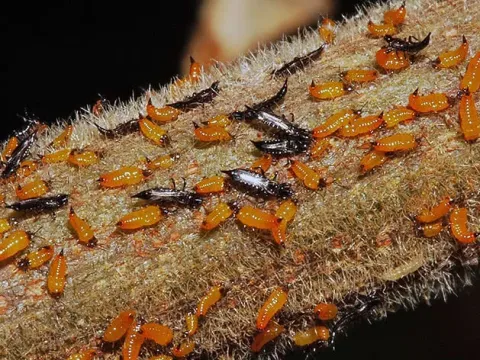
Lily thrips
Liothrips vaneeckei
The lily thrips (Liothrips vaneeckei) is a specialized insect belonging to the order Thysanoptera and the family Phlaeothripidae. The adult insect is typically black or dark brown and measures approximately 2 mm in length.
What the section contains
Lily thrips
Unlike many other thrips species, this pest is rarely found on the foliage. It lives exclusively in hidden, sheltered environments, primarily between the tight scales of lily bulbs.
The life cycle includes egg, larval, and pupal stages. The larvae are smaller than adults and have a characteristic yellowish or reddish hue. They thrive in the high-humidity environment within the bulb layers.
This species is highly elusive, making early detection extremely difficult for gardeners and producers. The pest is commonly introduced into new areas via infested planting material traded internationally.
Professional identification usually requires the physical dissection of the bulb scales, where adult thrips and their distinctive frass can be observed under magnification.
Lily thrips primarily attack plants of the genus Lilium. They feed by piercing the epidermal cells of the bulb scales and extracting sap, which causes significant physiological stress to the plant.
The physical damage caused by the feeding process results in localized necrosis and tissue death. These open wounds serve as entry points for secondary pathogens, including various fungal and bacterial rots.
Severe infestations can lead to the destruction of the bulb's basal plate and root system, preventing the plant from absorbing nutrients and water effectively during the growing season.
Stunted growth, yellowing foliage, and deformed flowers are common indicators that the bulbs are heavily infested and struggling to survive.
From an agricultural standpoint, lily thrips pose a major economic threat, as infested bulbs are often unsaleable and can lead to total crop loss if left untreated in storage.
The most common symptom of infestation is the appearance of reddish-brown, sunken spots on the outer or inner layers of the bulb scales, which eventually coalesce into larger necrotic areas.
Accumulation of black or dark brown insect frass is another diagnostic sign. This debris is often found packed in the crevices between bulb scales where the insects congregate.
During the vegetation phase, plants may appear weak, chlorotic, or fail to produce flowers. The overall loss of vigor is a direct consequence of the damage inflicted on the bulb by the feeding colony.
If you suspect an infestation, examine the bulbs closely, particularly around the basal plate and between the inner scales, for signs of insect presence or damage marks.
- Dark brown or rust-colored lesions on bulb scales.
- Presence of insect waste (frass) within the bulb structure.
- Weak root development and poor plant growth.
The most effective strategy is the rigorous inspection and quarantine of all lily bulbs before they are integrated into the garden or production cycle.
Pre-planting treatments involving systemic insecticides are highly recommended. Soaking the bulbs in a prepared solution ensures that the chemical reaches hidden pests between the scales.
Maintaining cold storage temperatures, ideally below 2°C, effectively suppresses the development and reproduction of the thrips during the storage season, preventing outbreaks.
Cultural practices, such as removing and destroying infested bulbs immediately upon discovery, are crucial for limiting the spread of the population to healthy lily stocks.
In cases of confirmed heavy infestation, implement an integrated pest management (IPM) approach that combines regular scouting, chemical rotation to prevent resistance, and strict hygiene in storage facilities.