
Franklinothrips vespiformis
Franklinothrips vespiformis
Description
How to identify
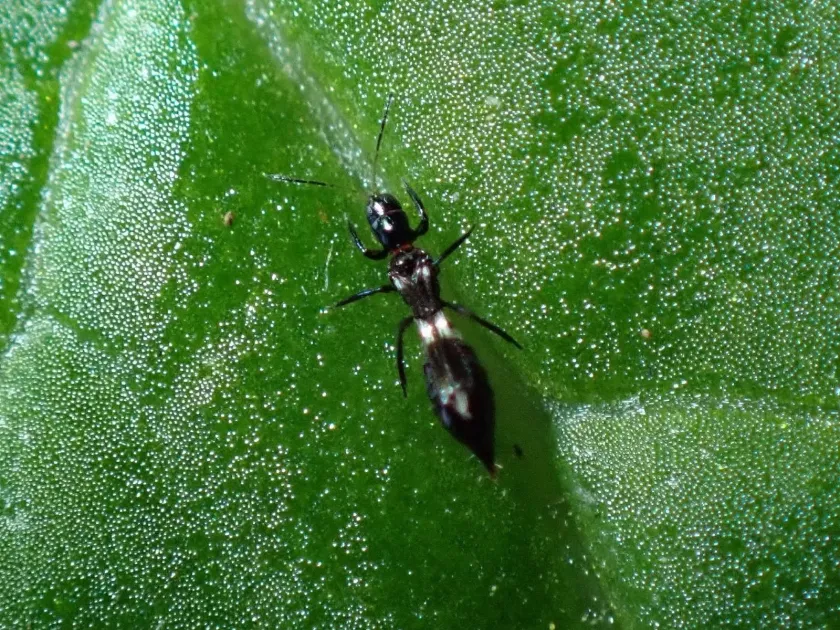
Franklinothrips vespiformis is a distinctive species of thrips known for its morphological mimicry of ants or wasps. This unique physical appearance, including a constricted waist, serves as an evolutionary strategy to evade predators.
Adults possess an elongated body, typically black with distinct white or yellow abdominal bands. Their wing patterns are also specialized, further enhancing their resemblance to Hymenoptera, which provides a significant defensive advantage.
The larvae of this species are remarkably mobile and exhibit ant-like movements on the leaf surface. Unlike many typical phytophagous thrips, these larvae often demonstrate predatory behavior, feeding on mites and smaller insects.
Identifying this species requires careful observation, ideally with a magnifying lens. Because they are sometimes mistaken for beneficial predators, it is crucial to accurately distinguish them to avoid unnecessary pesticide applications.
The lifecycle follows a process of complete metamorphosis, including egg, larval, prepupal, pupal, and adult stages. The pupal stage often occurs in the soil or in sheltered crevices on the host plant, where they remain protected.
What it damages
Although Franklinothrips vespiformis acts as a beneficial predator in many ecosystems, it can cause secondary damage to plants when its primary prey is scarce. In such cases, it may feed on plant cell contents.
Damage is characterized by the piercing and sucking of plant epidermal cells, leading to the formation of silver-like patches on leaves. If the infestation is severe, these patches merge, causing widespread necrosis of the leaf tissue.
Ornamental and tropical crops in greenhouses are the most susceptible to damage. Plants such as ficus, palms, and various exotic ornamentals are frequently affected, especially under high temperature and humidity conditions.
The feeding activity not only weakens the plant structurally but also facilitates the entry of pathogenic fungi and bacteria. This secondary infection often causes more visible damage than the direct feeding of the thrips themselves.
Stunted growth and leaf deformity are common symptoms of significant infestation levels. When young shoots are targeted, the overall development of the plant can be severely compromised, leading to poor plant quality.
When it appears
The seasonal activity of this thrips species is heavily dictated by environmental factors. In greenhouse environments, where temperatures remain consistently high, the insect can maintain active populations throughout the entire year.
The peak of reproductive activity typically occurs during warmer months when metabolic rates are highest. During this period, the duration of each lifecycle stage is significantly shortened, leading to rapid population growth.
Warm and humid conditions favor the development of the species, making late spring and summer critical times for monitoring. Consistent humidity levels within the greenhouse environment can accelerate the emergence of new generations.
Dispersal within a growing area is facilitated by both flight and the movement of infested plant material. As temperatures drop in the autumn, the insects often transition into a period of dormancy, seeking refuge in the soil.
Effective management requires awareness of these seasonal trends, as the timing of control measures significantly impacts the ability to suppress population outbreaks before they reach critical levels.
Signs of infestation
The initial signs of infestation include small, irregular silver or grayish spots on the leaves. These spots are caused by air entering the plant cells after the thrips have emptied them of their contents.
Dark fecal spots on the underside of the leaf surface are a primary diagnostic sign. These tiny black specks, accompanied by cast-off larval skins, are clear indicators that a thrips population is present.
Leaf curling and the distortion of young, developing shoots are common indicators of a high pest density. If the plant shows signs of flagging or premature leaf drop, it is often a sign of prolonged feeding activity.
Visual identification of the ant-like adults is possible upon close inspection. When the plant is gently agitated, these insects often exhibit rapid, darting movements across the leaf surface, moving toward hidden areas.
- Presence of silver or grayish stippling on foliage.
- Small dark fecal deposits on leaf undersides.
- Deformed or curled young leaves.
- Slow or stalled plant development.
- Increased incidence of fungal rot at feeding sites.
Control measures
Biological control represents the most sustainable approach for managing this species. Encouraging natural predator populations can help maintain the thrips numbers below the economic threshold without the need for chemicals.
When chemical intervention is necessary, the use of systemic insecticides is typically most effective. These products are absorbed by the plant tissue, targeting the insects as they feed on the internal plant fluids.
Cultural practices, including strict greenhouse sanitation, are essential. Removing crop debris and managing weed populations near the growing area effectively eliminates alternative hosts and breeding sites for the thrips.
Blue sticky traps are highly effective for population monitoring and early detection. By placing these traps throughout the growing area, growers can identify the arrival of the pest and track its movement effectively.
Integrated Pest Management (IPM) programs should be used to balance biological and chemical strategies. Ensuring proper temperature and ventilation management also plays a key role in making the environment less favorable for the pest.
Taxonomy
- Latin name
- Franklinothrips vespiformis
- Order
- Thrips
- Family
- Aeolothripidae
- EPPO code
- FRALVE
Discussion
No discussions yet — be the first.