
Aeolothrips intermedius
Aeolothrips intermedius
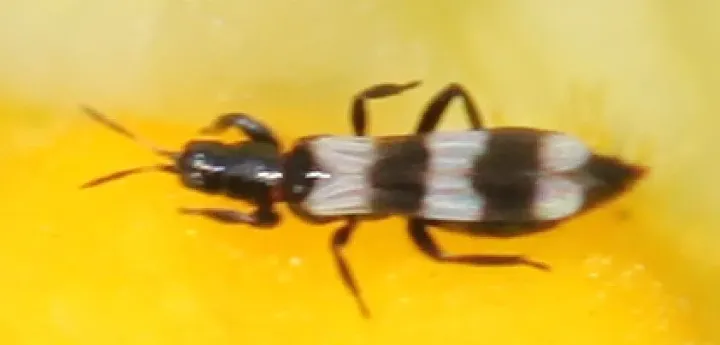
Description
How to identify
Aeolothrips intermedius is a species belonging to the Thysanoptera order, specifically the Aeolothripidae family. Adult insects are slender, typically 1.5 to 2 mm long, and have a dark brown or black body with distinct pale bands on their forewings.
The larvae progress through several developmental stages before reaching adulthood. They are highly mobile and possess mouthparts designed for piercing and sucking plant fluids, although this species is also known to exhibit predatory behavior.
Widely distributed across the Eurasian continent, this species is frequently encountered in various agro-ecosystems. Adults are capable of active flight, enabling them to migrate long distances to locate suitable host plants.
Environmental factors, particularly temperature and humidity, play a critical role in their reproductive success. Favorable weather conditions can lead to rapid population growth within a single growing season.
Field monitoring is often conducted using colored sticky traps. Because of their small size, these traps are essential tools for agricultural professionals to track population density and determine the necessity of intervention.
What it damages
This pest affects a wide range of crops, including cereals, legumes, essential oil plants, and vegetables. Significant damage typically occurs during the flowering stage, as adults congregate in the reproductive structures of the plant.
The primary damage is caused by feeding on flowers, which disrupts pollination and interferes with fruit or seed development. This leads to a measurable decrease in yield and lower quality of the harvest.
In addition to direct mechanical damage, these thrips can facilitate the entry of secondary infections. Their feeding sites serve as infection paths for various bacterial and fungal pathogens that affect plant health.
Deformation of flowers and premature shedding of buds are common symptoms of infestation. For crops like alfalfa and clover, this can result in substantial economic losses, impacting overall farm productivity.
Severe infestations also lead to reduced seed vigor and lower thousand-kernel weight in cereal crops. Assessing the extent of damage is vital for making informed decisions regarding potential chemical or biological controls.
When it appears
Adults typically overwinter in the soil or beneath crop residues. With the onset of spring and warmer temperatures (usually above 10-12°C), they emerge and begin to feed on early weeds and available vegetation.
The first generation usually develops on wild host plants before migrating to agricultural fields. The peak of infestation generally aligns with the flowering period of major crops during the early to mid-summer months.
Multiple generations can occur throughout the growing season. The number of generations is highly dependent on the local climate, with hot, dry summers significantly accelerating the life cycle of the pest.
As temperatures drop in the autumn, adults transition to diapause. They retreat into the soil to seek shelter against winter conditions, ensuring the population's survival until the next spring season.
Monitoring should start early, as soon as the first floral buds appear. Timely identification of the pest's presence allows for early management, preventing the population from reaching levels that require intensive chemical treatment.
Signs of infestation
Visual identification of infestation is characterized by silvery or bleached patches on leaves and petals. These marks occur as the insects extract cell contents, causing the tissue to lose its natural pigmentation.
Close inspection of flowers often reveals the insects hiding within. Using a white paper under the plant and tapping it is a reliable field method to dislodge the thrips and confirm their identity through movement.
Tiny black fecal dots on foliage are another common sign of an active infestation. These marks are often the first indicator that the pest population is establishing itself on the crop plants.
Stunted growth, curled leaves, and distorted buds are typical symptoms of heavy infestation. When plants exhibit these signs, their photosynthetic capacity is often reduced, leading to weakened growth and lower resilience.
Any inexplicable decline in flower quality or seed set during dry weather should prompt a search for thrips. Swift action upon spotting these signs can significantly mitigate the overall impact on the final harvest.
Control measures
Cultural control measures include autumn plowing to destroy overwintering sites in the soil. Maintaining weed-free fields throughout the season is crucial, as it removes secondary host plants that support the thrips' population.
Crop rotation is an effective long-term management strategy. By alternating crops that are not favorable hosts, farmers can significantly lower the pest pressure within their specific agricultural fields.
Chemical intervention is recommended only when population levels exceed the economic threshold. Insecticides must be selected carefully to ensure efficacy while minimizing the impact on beneficial insect populations.
Biological control, using natural predators like predatory bugs or mites, is a viable component of integrated pest management (IPM) programs, offering a sustainable alternative to conventional pesticides.
- Establish spatial separation between different crop types.
- Use high-quality, pest-resistant plant varieties.
- Regular field scouting and monitoring using pheromone or sticky traps.
- Implement timely insecticide applications if necessary.
Taxonomy
- Latin name
- Aeolothrips intermedius
- Order
- Thrips
- Family
- Aeolothripidae
- EPPO code
- AEOOIN
Discussion
No discussions yet — be the first.