
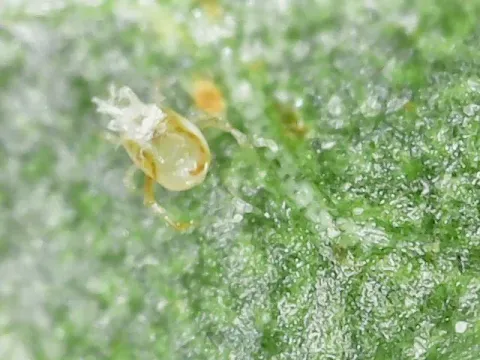
Typhlodromus californicus
Typhlodromus californicus
Typhlodromus californicus is a predatory mite species belonging to the family Phytoseiidae. It is widely recognized as a highly effective biological control agent in modern agriculture.
What the section contains
Typhlodromus californicus
The adult mites are pear-shaped, typically ranging in color from pale cream to light orange. They are very small, measuring approximately 0.3 to 0.4 mm in length.
Its biological activity is characterized by significant mobility and the ability to consume prey continuously throughout its life stages.
The developmental stages include eggs, larvae, protonymphs, deutonymphs, and adults. Under favorable conditions, the lifecycle is completed in about 7–10 days.
These mites are resilient and can sustain their populations on alternative food sources such as pollen or nectar when primary prey densities are low.
It is critical to note that Typhlodromus californicus is not a plant pest; it is a beneficial predator that helps eliminate destructive spider mites (Tetranychidae).
It is used extensively on various crops, including greenhouse tomatoes, peppers, strawberries, grapes, and ornamental plants to suppress infestations.
The predator feeds on all stages of spider mites, effectively piercing them and extracting their body fluids, which stops the reproductive cycle of the pest.
By deploying these mites, growers prevent the severe leaf damage and plant decline typically caused by spider mite feeding, such as stippling and webbing.
The use of this predator is a cornerstone of Integrated Pest Management (IPM), promoting sustainable farming and reducing the reliance on chemical pesticides.
To maximize effectiveness, Typhlodromus californicus should be released as soon as the first signs of spider mite pressure are detected in the field or greenhouse.
Chemical control must be carefully managed; avoid using broad-spectrum pesticides, as these will kill the predatory mite population and potentially cause a pest resurgence.
The environment should be managed to maintain adequate humidity levels, as excessive dryness can negatively affect the survival and activity of the mites.
When chemical applications are absolutely necessary, select pesticides that have been tested and classified as "safe" or "compatible" with phytoseiid mites.
Continuous monitoring of the crop is essential to ensure that the ratio of predators to prey remains optimal for protecting the plant throughout the growing season.