
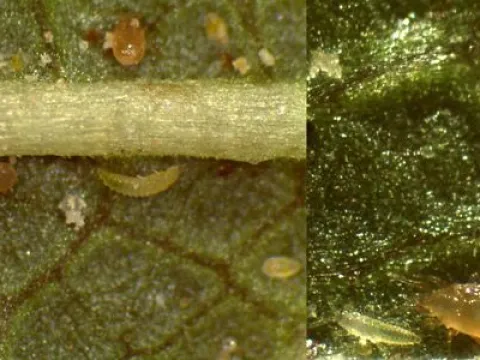
Typhlodromus thripsi
Typhlodromus thripsi
Typhlodromus thripsi is a mite belonging to the Phytoseiidae family within the order Mesostigmata. While primarily predatory, it can impact plant physiology when populations explode in controlled environments.
What the section contains
Typhlodromus thripsi
The adult mites are microscopic, measuring approximately 0.3 to 0.4 mm in length. Their bodies are typically yellowish-brown or translucent, allowing them to blend in with leaf structures.
Their life cycle consists of egg, larva, protonymph, deutonymph, and adult stages. Under ideal greenhouse conditions, the entire life cycle can be completed in less than a week.
These mites are highly mobile and tend to congregate on the undersides of leaves, especially near the main veins where they find shelter and feeding opportunities.
Proper identification requires a magnifying glass or a microscope, as their small size and rapid movement make naked-eye observation difficult for the average grower.
Typhlodromus thripsi causes damage by feeding on the sap of various greenhouse and ornamental plants, piercing the leaf epidermis to extract cell contents.
This feeding activity leads to significant chlorosis, as the removal of chlorophyll interferes with the plant's photosynthesis processes and overall energy production.
High infestation levels result in severe leaf yellowing, stunting of growth, and, in extreme cases, the total loss of photosynthetic tissue, leading to plant death.
Damage to the meristematic tissues or flower buds often results in stunted, deformed growth that renders the plants commercially unacceptable.
The physiological stress induced by these mites also weakens the plant's immune response, making it more susceptible to secondary fungal or bacterial pathogens.
The earliest signs of infestation are small, pale speckles on the leaf surface, which gradually expand into larger patches as the mite colony grows.
Leaf curling and buckling are common symptoms, as the localized tissue damage disrupts the normal growth pattern of the leaf lamina.
A dull, dusty appearance on the underside of leaves is often observed, which is composed of mite excrement, cast skins, and debris from their feeding activities.
In ornamental species, you may notice premature senescence and shedding of foliage, as well as a significant reduction in flower count and quality.
Growth tips often become brittle or necrotic, signaling that the infestation has reached a critical stage that requires immediate intervention.
Integrated Pest Management (IPM) is the most effective approach for controlling Typhlodromus thripsi, emphasizing both prevention and targeted treatment.
Maintaining proper greenhouse humidity and ventilation is essential, as these mites thrive in dry, stagnant air conditions typical of poorly managed facilities.
Acaricides should be applied in strict accordance with the manufacturer's instructions, ensuring thorough coverage of the leaf undersides where mites reside.
Recommended management practices include:
- sanitizing equipment regularly to prevent cross-contamination between greenhouse bays;
- eliminating weeds inside and outside the facility that act as alternative hosts;
- rotating chemical classes of miticides to prevent the development of resistant mite populations.
Consistent monitoring using yellow sticky traps and regular leaf inspections allows for early detection, which is crucial for successful population suppression.