
Turanoclytus
Turanoclytus
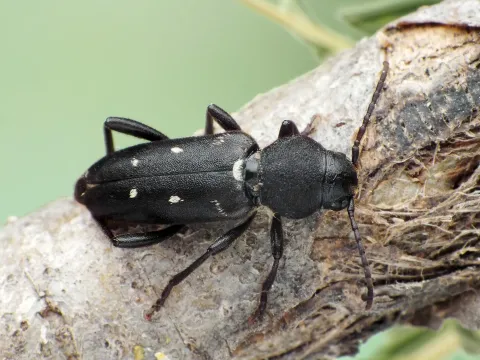
Turanoclytus is a genus of beetles belonging to the longhorn beetle family (Cerambycidae), specifically the subfamily Cerambycinae. Physically, the adults are characterized by a slender body shape and often exhibit bright, contrasting colors that serve as mimicry to resemble wasps or other stinging insects.
What the section contains
Turanoclytus
The adults possess long antennae, which are characteristic of most species in the family, although in this genus, the antennae usually do not exceed the body length. The surface of the elytra is often covered with fine hairs, forming specific patterns of stripes or spots, which aids in camouflage against the bark of host trees.
Larvae of Turanoclytus have the typical appearance of wood-boring insects: a white, cylindrical body that is thickened at the front, equipped with well-developed mandibles adapted for gnawing through tough woody tissues. They lack developed limbs, an evolutionary adaptation to living within narrow tunnels.
Identifying specific species within this genus is often difficult due to significant color variability. Therefore, for accurate field diagnostics, agronomists should utilize identification keys that focus on the structure of the pronotum and the specific color patterns on the beetle’s elytra.
Unlike many other pests, adult Turanoclytus are diurnal and are often found on flowering plants or the trunks of host trees, where they feed on pollen and sap before beginning the egg-laying process.
The primary damage is caused by the larvae, which lead a concealed life, boring winding tunnels through the bark and sapwood of trees. This activity disrupts the natural flow of sap and leads to the gradual weakening of the host plant.
Turanoclytus typically chooses various deciduous tree species as hosts, including fruit trees. The pest poses the greatest threat to weakened, damaged, or aged trees, which are highly susceptible to infestation.
Extensive damage to trunks and major branches often results in the premature wilting and death of entire sections of the canopy. In cases of massive outbreaks, the tree may perish within a few seasons due to the destruction of the cambium layer and the disruption of vascular tissues.
In addition to direct physical damage to the wood, the tunnels created by the larvae serve as entry points for secondary infections, such as fungal diseases and bacterial rots, which significantly accelerate the decline of the infested tree.
In agroecosystems, particularly in poorly managed orchards, the activity of Turanoclytus leads to reduced productivity of fruit crops and a significant reduction in their economic lifespan.
The life cycle of Turanoclytus is closely tied to the phenological development phases of host trees. The emergence of adult beetles usually coincides with the period of active flowering and the start of tree vegetation, allowing the adults to feed on pollen.
The flight period generally occurs in late spring and the first half of summer. During this time, females actively seek suitable trees for oviposition, preferring areas with damaged bark or weakened specimens that emit specific volatile compounds.
The larval stage is the longest part of the life cycle and may last from one to several years, depending on regional temperature regimes and the quality of the wood substrate, which makes pest control a cyclical and long-term task.
Pupation typically occurs in late winter or early spring inside the wood. After emerging from the pupa, the adult beetle gnaws an exit hole to reach the surface, signaling the start of the breeding season and closing the annual cycle.
Monitoring the pest population should be conducted during May and June, when the insects are most visible and vulnerable to primary control measures in orchards and windbreaks.
One of the most characteristic signs of Turanoclytus presence is the appearance of small, often oval-shaped holes on the bark surface of trunks and thick branches, created by the beetles upon emergence.
Beneath the bark of infested trees, one can find specific tunnels packed with "frass," a mixture of larval excrement and pulverized wood fibers, which visually resembles compressed sawdust.
In the early stages of infestation, minor sap or gum exudation may be observed at the larval entry points. With severe infestations, the bark may begin to crack, flake off, or show unusual roughness in the areas where the larvae are feeding.
A sign of a tree in critical condition is the wilting of individual branches, followed by yellowing and premature leaf drop, indicating severe impairment of the plant's vascular system due to larval activity.
Occasionally, adults may be spotted near infested trees or found as remains in the webs of predatory insects, providing indirect evidence of an active breeding phase of Turanoclytus in the area.
The cornerstone of Turanoclytus control is timely orchard sanitation, which includes the removal and mandatory destruction of deadwood, as well as heavily damaged or weakened trees that act as primary breeding grounds.
Maintaining high agricultural standards is a crucial preventive measure: proper irrigation, balanced fertilization, and timely pruning enhance tree immunity, making them less attractive to wood-boring pests.
If isolated tunnels are detected on valuable trees, mechanical cleaning of the damaged bark down to healthy tissue is recommended, followed by sealing the wounds with pruning paste or specialized fungicidal compounds.
The application of contact or systemic insecticides is most effective during the adult flight period when beetles are moving across the bark surface or visiting flowers, though these applications must strictly adhere to environmental regulations.
To prevent massive outbreaks, the use of pheromone traps or sticky bands during peak beetle activity periods is recommended, allowing for population control without the need for total chemical intervention in the orchard.