
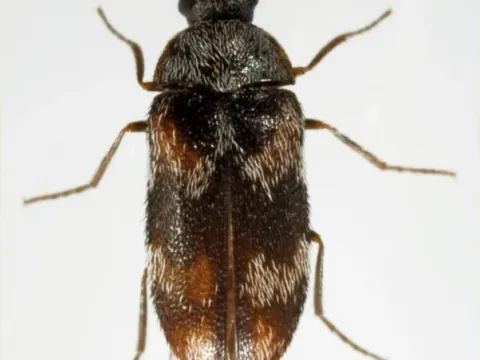
Trogoderma tarsale
Trogoderma tarsale
Trogoderma tarsale belongs to the Dermestidae family, a group of beetles known for their ability to feed on a wide variety of dry organic materials.
What the section contains
Trogoderma tarsale
Adult beetles are small, generally 2.5 to 3.5 mm in length, with an oval shape and a dark-colored body that allows them to blend into crevices.
The larvae are covered in dense, distinctive hairs, which is the primary morphological feature used to identify this species during inspections.
The lifecycle consists of egg, larval, pupal, and adult stages, with the duration of these stages highly dependent on ambient temperature and food availability.
They are particularly adapted to indoor environments, thriving in silos, warehouses, and pantries where they can remain protected from environmental fluctuations.
The larval stage is the most destructive, as they consume the embryos and endosperm of stored grains, leading to significant mass loss.
Commonly attacked commodities include wheat, corn, rice, various cereal products, seeds, and dried food items stored for long periods.
Aside from direct consumption, the larvae contaminate stored products with shed skins, fecal pellets, and silk webbing, significantly reducing commercial value.
In high-density infestations, the larvae can penetrate packaging materials, leading to the cross-contamination of products within a warehouse facility.
Economic losses arise not only from the loss of weight but also from the cost of cleaning or disposing of heavily infested grain batches.
The most frequent sign of an infestation is the accumulation of larval exuviae (cast skins) in the corners, crevices, and along the floors of storage areas.
Visible damage to grain kernels, characterized by irregular holes and the presence of fine dust-like debris, indicates active feeding by the larvae.
Monitoring traps containing specific pheromones are highly effective in detecting the presence of adults before the population reaches an uncontrollable level.
Patches of infested grain may show signs of clumping due to the secretion of silk by larvae during their growth and development phases.
Direct visual observation of larvae, particularly in warm and undisturbed areas of the facility, confirms the need for immediate intervention.
Sanitation is the cornerstone of Trogoderma tarsale management, requiring the regular removal of spills and dust accumulation where larvae may develop.
Fumigation is the most effective chemical method for eradicating existing infestations, using approved fumigants that can penetrate deep into the grain mass.
Residual surface sprays applied to floors and walls after cleaning provide a preventive measure against re-infestation from exterior sources.
Aeration systems used to maintain low grain temperatures inhibit the developmental rates of the insects and keep the stored product in a stable condition.
- Sealing all entry points into the storage facility.
- Regular inspections using pheromone-based monitoring tools.
- Ensuring proper stock rotation to prevent long-term exposure.
- Using moisture-resistant storage containers for processed goods.